Ambrose Bierce Quotes
A large stone presented by the archangel Gabriel to the patriarch Abraham, and preserved at Mecca. The patriarch had perhaps asked the archangel for bread.
Bierce, Ambrose. The Devil's Dictionary. The Neale Publishing Company, 1911.


Historically, this quotation shows that the negative relationship between the West and Islam and negative views of Islam was not a new phenomenon at the beginning of the 21st century. It existed long before, and as with the 21st century concerns, violence and war were the major concerns.

The Western Wall of the original Jewish Temple in Jerusalem is the holiest place for Jewa. When it was controlled by Jordan, Jews were not allowed to visit and pray at the Wall. However in 1967 the Arab states again attacked Israel in force and when the Israelis defeated the Arabs, the took the portion of Jerusalem that contained the Western Wall. At that point Jews would have access to the wall for prayer or historical purposes. However, in the convoluted politics of Israel where minor religious parties often can topple the government, the administration of the Wall was turned over to an Ultra Orthodox organization, and they barred Women from the Wall. The government would not intervene and the case ended up in the Israeli Supreme Court which ruled that women had to have equal access. The government then offered to create an area where women could pray at the wall while orthodox men could could have their segregated area where they would not risk contact with women. The ultra orthodox still objected as they believed that it was a desecration for women to pray at the wall, so the government stalled, and it took almost a decade before there was progress in having the women’s area opened.


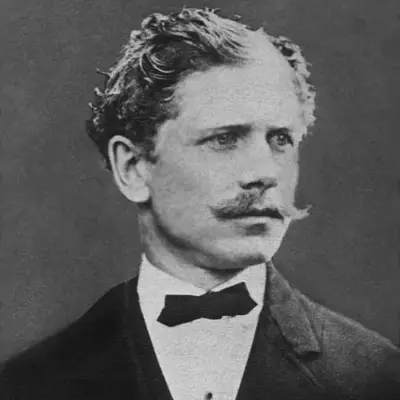
Ambrose Gwinnett Bierce was an American short story writer, journalist, poet, and Civil War veteran. His book The Devil's Dictionary was named as one of "The 100 Greatest Masterpieces of American Literature" by the American Revolution Bicentennial Administration. His story "An Occurrence at Owl Creek Bridge" has been described as "one of the most famous and frequently anthologized stories in American literature"; and his book Tales of Soldiers and Civilians (also published as In the Midst of Life) was named by the Grolier Club as one of the 100 most influential American books printed before 1900.
