Susan Sontag Quotes
A large part of the popularity and persuasiveness of psychology comes from its being a sublimated spiritualism: a secular, ostensibly scientific way of affirming the primacy of "spirit" over matter.
Sontag, Susan. Illness as Metaphor. Farrar, Straus and Giroux, 1978, p. 55.

At the time, Muslim clerics had a great deal of influence and in many cases legal control over all facets of Turkish society much as exists in other Islamic societies today. They even controlled what was taught in the schools. Remarkably, without bloodshed, Ataturk broke both the power and the influence of the clerics on all official and public activities. Many Turkish Muslims even developed a type of reformed Islam with the relationship between the individual and the clerics one of parity much like Protestant churches in the West. At the same time there was a more orthodox part of the population and while they sent their children to religious schools, they also attended public schools so even the orthodox Muslims in Turkey learned science and modern subjects which are still not taught in most Islamic schools and madrassas.


The same polarization is still with us.


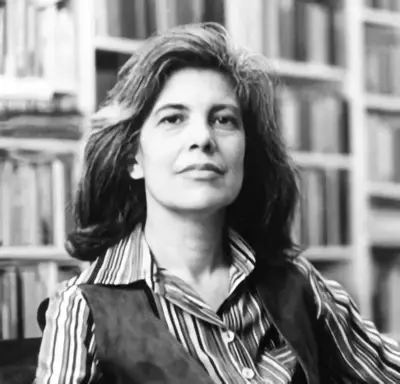
Susan Sontag was an American writer, filmmaker, philosopher, teacher, and political activist. She mostly wrote essays, but also published novels; she published her first major work, the essay "Notes on 'Camp'", in 1964. Her best-known works include the critical works Against Interpretation (1966), Styles of Radical Will (1968), On Photography (1977), and Illness as Metaphor (1978), as well as the fictional works The Way We Live Now (1986), The Volcano Lover (1992), and In America (1999).
