Martin Luther King Jr. Quotes
A just law is a man made code that squares with the moral law or the law of God. An unjust law is a code that is out of harmony with the moral law. To put it in the terms of St. Thomas Aquinas: An unjust law is a human law that is not rooted in eternal law and natural law. Any law that uplifts human personality is just. Any law that degrades human personality is unjust.


The power structure of England and the English administrators of South Africa were strong advocates of racial equality at the beginning of the 19th century. They insisted on equal administration of law. However the Boer white population could think of nothing more absurd. In a sense the Boers were much like the Southern Whites at the same time. The South African government however could not enforce its equality policies in the rural area – the majority of South Africa at the time. When democracy and self rule came to South Africa, the racially moderating force of the English was minimized and the majority of South Africans wanted a racially segregated society. Apartheid resulted.


See François de La Rochefoucauld for a later version of this sentiment. Quintus Horatius Flaccus


This quotation had a close proximity to Lincoln’s Gettysburg Address {458852}. Although this was probably Lincoln's most famous, was not totally original. John Adams came close in a 1774 proclamation {598723}. As did John Marshall in his McCulloch v. Maryland decision. Daniel Webster's Speech on Foot's Resolution was very close {606471}. There was also Thomas Cooper in 1795 {598723} . But the earliest close phrase use appears to be John Wycliffe in 1382 {567292}. It is not known with which of these Lincoln was familiar,


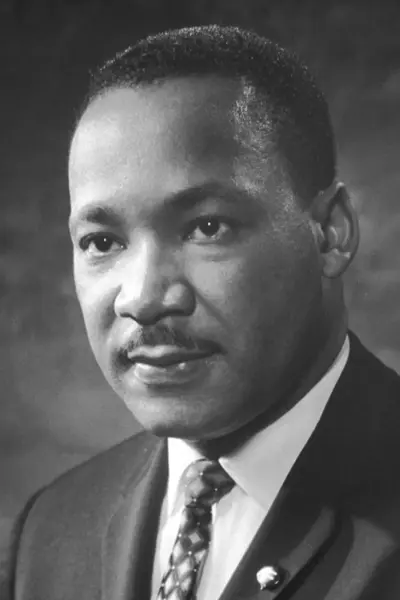
- Born: January 15, 1929
- Died: April 4, 1968
- Nationality: American
- Profession: Clergyman, Activist
Martin Luther King Jr. was an African American Baptist minister and activist who became the most visible spokesperson and leader in the American civil rights movement from 1955 until his assassination in 1968. King advanced civil rights through nonviolence and civil disobedience, inspired by his Christian beliefs and the nonviolent activism of Mahatma Gandhi. He was the son of early civil rights activist Martin Luther King Sr.
