Johann Wolfgang von Goethe Quotes
A great revolution is never the fault of the people, but of the government.
Johann Wolfgang von Goethe, 1749-1832, German Writer, Quoted in Eckermann, Conversations with Goethe, January 4, 1824
Sourced by: Eigen's Political and Historical Quotations

The veiled threat of violence and disruption was a tactic that did not work.


The Turkish revolution was by historical standards relatively bloodless as compared especially with other republican revolutions like the United State and France. However, the revolution that brought Ataturk to power was a relatively mild one in terms of the immediate changes that unlike many revolutions which produced instant radical change. In Turkey, the radical change took place in the years after the revolution when Ataturk with hardly any bloodshed produced compulsory public secular education, scientific elevation in society, separation of mosque and state, gender equality including universal voting, change to western dress, elimination of the caliphate, speech and press freedom, and many others including changing the entire language to use the Latin alphabet instead of Arabic. No nation in history has gone thought more social and cultural change and modernized so fast as Turkey after its revolution. The result is the most modern and successful Islamic country in the world.


Germany, after its defeat in WWI was going through massive demonstrations and strikes. The government kept issuing bulletins that “Order Prevails” and the like. Luxemburg’s rhetoric and writing was so damaging to the government that they had her assassinated shortly after this statement.


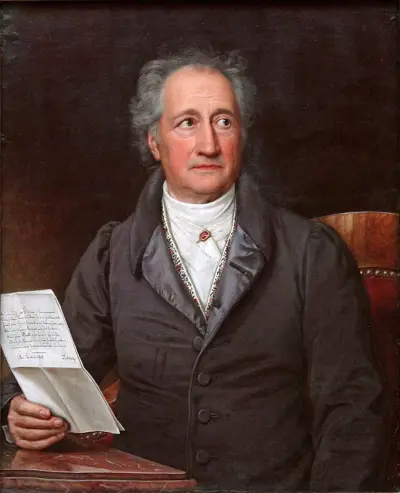
Johann Wolfgang von Goethe was a German poet, playwright, novelist, scientist, statesman, theatre director, critic, and amateur artist. His works include: four novels; epic and lyric poetry; prose and verse dramas; memoirs; an autobiography; literary and aesthetic criticism; and treatises on botany, anatomy, and colour. He is considered to be the greatest German literary figure of the modern era.
