Napoleon Bonaparte Quotes
A great Nation should have a fixed Government, so that the death of one man should not overturn it.
Bonaparte, Napoleon. Political Aphorisms, Moral and Philosophical Thoughts of the Emperor Napoleon. Edited by G. de Liancourt, T.C. Newby, 1848.


There were major construction projects prepared for the Capitol building at the beginning of the Civil War. There was a question of whether the expensive construction was then appropriate.


He was referring to the President of Egypt in the midst of the Egyptian soft revolution of 2011. Wisner had been asked by the President to tell the corrupt and dictatorial President of Egypt to step down quickly. A few days later, Wisner gave a speech calling for the 30 year Egyptian dictator to finish out his term so he could “steer the changes”. He claimed that he was not speaking for the administration in this speech but it was a personal view. However, the speech created much world confusion as to what the US administration policy actually was. The quotation illustrates one of the problems of conducting diplomacy in a free democracy. A president asks a citizen to represent him; he does, and then turns around and undercuts the very position he was supposed to take. In many counties such an disloyal act would be considered treason but in America there is nothing the administration could do about it, other than to say that the Munich speech was contrary to US policy.

With a legislature of two houses, both have to agree to any change in order for it to take effect. This is always harder to do than to have change voted by a single legislative body.

Cromwell was not opposed to monarchy per se as long as it was reasonably checked. He saw Charles II as a terrible monarch. After deposing Charles, he and his associates had to come up with some form of government. As “Lord Protector” he was a de facto monarch without the trappings.


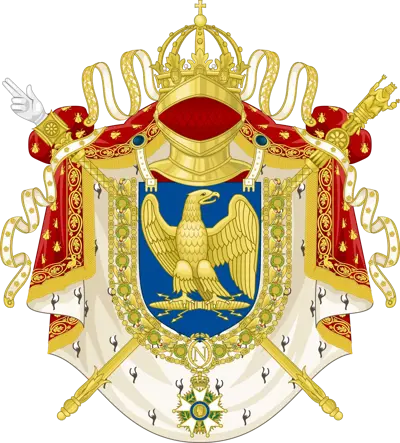
Napoléon Bonaparte was a French military and political leader of Corsican descent. He rose to prominence during the French Revolution and led several successful campaigns during the Revolutionary Wars. As Napoleon I, he was Emperor of the French from 1804 until 1814, and again in 1815. Napoleon dominated European and global affairs for more than a decade while leading France against a series of coalitions in the Napoleonic Wars. He won most of these wars and the vast majority of his battles, building a large empire that ruled over continental Europe before its final collapse in 1815. One of the greatest commanders in history, his wars and campaigns are studied at military schools worldwide. He remains one of the most celebrated and controversial political figures in human history.
