Bernard Levin Quotes
… a brutality, cunning and greed for power normally met only in the conclaves of Mafia capi
Earl of Stockton
Bernard Levin, 1928-2004, English Political Columnist & Critic, Description of Harold Macmillan, 1894-1986, British Prime Minister (Conservative)
Sourced by: Eigen's Political and Historical Quotations


He was expelled from Parliament for such.

Referring to Nazi War Criminal Hermann Goering

This quotation is typical of the anti-government intense feeling, paranoia, and hyperbole of the early 21st century. While a minority of the American population identify with the Tea Party, the Center for a Stateless Society, and other anti-government groups. However, the orthodox members of both of the major political parties tended to avoid publicly criticizing these individuals and organizations lest they end up with an opponent in their next primary election which did not succeed in the majority of cases, but in all cases, it cost the politician a great deal of money, time, and energy to run a primary campaign which often weakens them for the general election that follows.


After Harry Truman stated that certain civil rights protests were communist inspired in 1960, his former Secretary of State requested that he restrain himself on this subject. The allegations of a communist conspiracy had arisen from the FBI’s chief, J. Edgar Hoover.

Describing his former boss, Newt Gingrich:

Referring to the Bureau of Alcohol, Tobacco and Firearms:

When Britain and America invaded Iraq and toppled the Saddam government, massive looting broke out. Britain and America were criticized by some for not protecting museums, government buildings and other targets of the looters, blaming the coalition for not maintaining law and order. Kilroy-Silk and others disagreed and blamed the looters primarily.

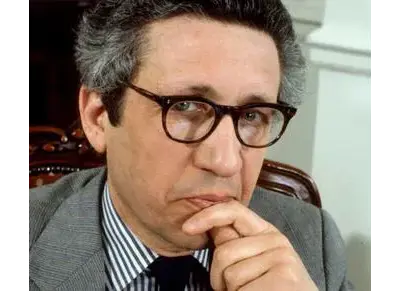
Henry Bernard Levin CBE was an English journalist, author and broadcaster, described by The Times as "the most famous journalist of his day". The son of a poor Jewish family in London, he won a scholarship to the independent school Christ's Hospital and went on to the London School of Economics, graduating in 1952. After a short spell in a lowly job at the BBC selecting press cuttings for use in programmes, he secured a post as a junior member of the editorial staff of a weekly periodical, Truth, in 1953.
