Hassan Al-Turabi Quotes
... elections are no longer representative.
Defending the Sudanese repression of political parties and dissent:
Hassan Al-Turabi, Sudanese Philosopher and Government Advisor, Party Leader, National Islamic Front, Speech, Center for Strategic and International Studies, Washington DC, May 1992
Sourced by: Eigen's Political and Historical Quotations


The legislators control redistricting and with the aid of modern computers, choose the demographics of the voters that they want in their districts even if they have to distort and Gerrymander the election district.


The Democrats had Gerrymandered Illinois very much the way the Republicans did it in Texas in 2000, thus enabling Stephen A Douglas to defeat Abraham Lincoln for Illinois Senator. However, when Lincoln realizing that he, a relative minor political figure, had come so close despite the gerrymandering, he was emboldened to run for the Presidency.

In September of 2005 a Danish Newspaper published some political cartoons showing the hypocrisy of some Muslims who use Islam to justify murder of innocents and terrorism. Months later, many in the Middle East protested vehemently and Muslim riots broke out because the Prophet Muhammad's visage was depicted against Islamic tradition. Many Muslim leaders claimed that insulting religion was an “abuse” of freedom of speech including those from nations which regularly publish material that is virulent against Christians and Jews.
The column was written in the midst of the confusing 2000 Presidential election.


Madison was right on most things, but got this one wrong. Of course he did not anticipate the era of mass communication which makes demagoguery in large areas possible.


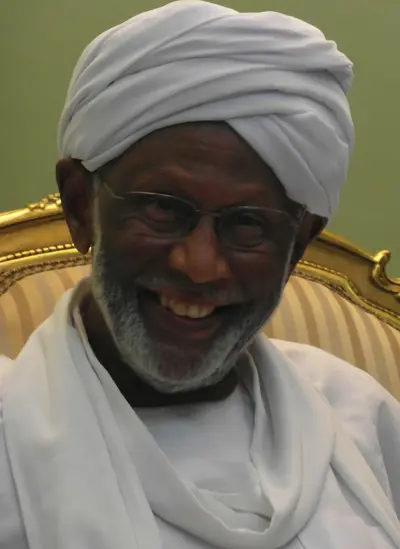
Hassan 'Abd Allah al Turabi was a Sudanese Islamist politician who was considered "the true architect" of 1989 coup that brought Omar Al-Bashir to power. He has been called "one of the most influential figures in modern Sudanese politics", and a "longtime hard-line ideological leader". He was instrumental in institutionalizing sharia (Islamic law) in the northern part of the country and was frequently imprisoned in Sudan, but these "periods of detention" were "interspersed with periods of high political office".
