Richard Burdon Haldane Quotes
… an illiterate with an unbalanced mind.
Richard Burdon Haldane, 1856-1928, Lord Chancellor of England, Description of David Lloyd George, Quoted in Giovanni Costigan, Makers of Modern England
Sourced by: Eigen's Political and Historical Quotations

He was himself under investigation by Italian prosecutors who he never missed an opportunity to insult.

Even though a Muslim and one of the senior members of Jinnah's Muslim League, he thought that Jinnah and British Prime Minister Clement Attlee were delusional about being able to have a Muslim nation encompassing the Punjab. He was right, and hundreds of thousands died in Sikh-Muslim attacks and then Hindu-Muslim conflict in the Punjab. Khizar left politics and would not take any post in Pakistan after the partition of the Punjab and the slaughter that followed.


Pound was not only an admirer of Mussolini and Fascism, but actually was a traitor and became a propagandist for the Axis in WWII. At his treason trial after the war, he had a breakdown and was committed to a mental hospital as he was not fit to stand trial. He was hospitalized for 12 years.

During the 1956 Suez crisis, President Eisenhower, distressed at the British invasion of Egypt, phoned British Prime Minister Anthony Eden. Although he didn't realize it, Eisenhower was actually addressing Eden's press secretary:


This is the oldest test in Western jurisprudence as to whether a person was insane at the time he/she committed a crime. In England, the House of Lords functions as the Supreme Court.

Johnson, a retired General was very conservative and old fashioned. The saddle sores comment harkens back to the Army in the early 1900s when horses were the primary mode of transportation.


Llewellyn H. Rockwell, Jr. The title was a take-off on the film, The Madness of King George, that described a demented king of England.


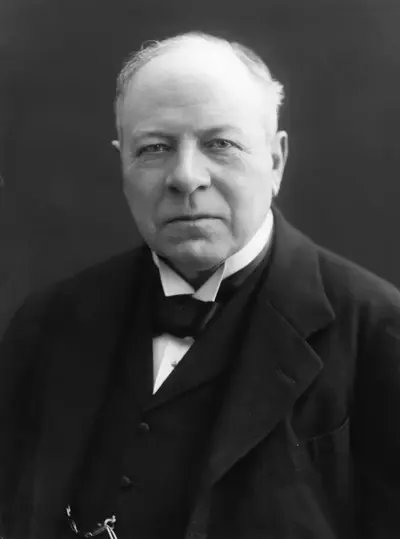
Richard Burdon Haldane, 1st Viscount Haldane, KT, OM, PC, FRS, FSA, FBA, KC was an influential British Liberal and later Labour politician, lawyer and philosopher. He was Secretary of State for War between 1905 and 1912 during which time the "Haldane Reforms" of the British Army were implemented. Raised to the peerage as Viscount Haldane in 1911, he was Lord Chancellor between 1912 and 1915, when he was forced to resign because of false allegations of German sympathies. He later joined the Labour Party and once again served as Lord Chancellor in 1924 in the first Labour administration. Apart from his legal and political careers, Haldane was also an influential writer on philosophy, in recognition of which he was elected a Fellow of the British Academy in 1914.
