Joan of Arc Quotes
You say that you are my judge; I do not know if you are; but take good heed not to judge me ill, because you would put yourself in great peril.
Joan of Arc. The Trial of Joan of Arc. Translated by Daniel Hobbins, Harvard University Press, 2005, p. 58.


1st Marquees of Halifax. This is a very important quotation because it still has much validity today. The “Prince” is the Monarch, King or Official Heading the State. Savile points out that if the Price does not take the time or make the effort to understand an issue and its complexity, he then must trust his advisors and their opinions rather than have any intelligent and knowledgeable views of his own. In modern times the advice applies to elected officials, executive and legislative. If they do not take time and make the effort to understand a complex issue, they cannot use their own judgment but must accept the judgment of staff, friends, colleagues, party leaders, lobbyists or members of committees who they hope are not also ignorant. In modern legislatures, there are so many different issues in so many areas, that it is very difficult to have the time to make the effort to study all the issues. This problem is compounded with politicians as they tend to spend large amounts of their time fundraising for their next election and simply do not have enough time to study issues. In the Congress for example, most members vote on bills that they have not even read and they end up trusting someone else’s judgment.


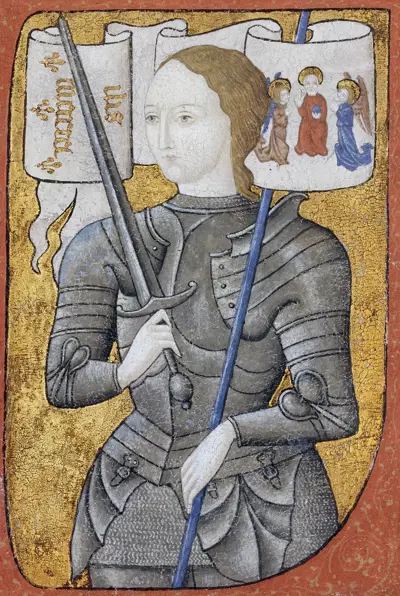
Joan of Arc, nicknamed "The Maid of Orléans" (French: La Pucelle d'Orléans) or "Maid of Lorraine" (French: La Pucelle de Lorraine), is considered a heroine of France for her role during the Lancastrian phase of the Hundred Years' War, and was canonized as a saint. She was born to Jacques d'Arc and Isabelle Romée, a peasant family, at Domrémy in the Vosges of northeast France. Joan said that she received visions of the archangel Michael, Saint Margaret, and Saint Catherine of Alexandria instructing her to support Charles VII and recover France from English domination late in the Hundred Years' War. The as-yet-unanointed King Charles VII sent Joan to the siege of Orléans as part of a relief army. She gained prominence after the siege was lifted only nine days later. Several additional swift victories led to Charles VII's consecration at Reims. This long-awaited event boosted French morale and paved the way for the final French victory at Castillon in 1453.
