Edwin Meese Quotes
You don't have many suspects who are innocent of a crime.
Edwin Meese, U. S. Attorney General (Republican), Quoted in Bob Schieffer and Gary Paul Gates, The Acting President, Dutton, 1989
Sourced by: Eigen's Political and Historical Quotations


Clarke and most of the others were convinced that it was Al Quaeda. Clark recommended a retaliation on the Al Quaeda facilities in Afghanistan. However, the weak FBI director had not then yet figured out what military intelligence, and the other National Security operatives already knew. Tenant and his CIA was then an enfeebled organization with which the FBI would not even share intelligence with. Tenant whose record of being wrong hit its acme on Iraq and WMD’s was unwilling to make a judgment. President Clinton was unwilling to make the independent judgment and launch a military attack unless the CIA and FBI would confirm the culprit as he was being accused of using a “wag the dog” scenario.

This is one of the many statements of President Bush that contributed to his reputation as a polarizing politician. His supporters turned to this statement to illustrate that Bush was a supporter of the Constitution and civil liberties by urging the nation not to engage in vigilantism or give vent to their stereotypic views of minorities. Detractors took the same statement as a perfect example of Bush’s assault on Constitutional freedoms. Law enforcement does not determine guilt or innocence in our system. Police and prosecutors in America do not determine guilt or innocence; juries do. They argue that the Bush administration law enforcement policies are designed to have law enforcement usurp more and more of this facet of criminal justice.

This quotation has become an operational principle of most justice systems of industrial democracies.

This interesting historical quotation illustrates the fact that in almost every American generation there are those who believe that society has gone too far in protecting the rights of criminal suspects at the expense of law and order in the general society. This is nothing new. This is a classic argument given by those who would deny a defendant the Constitutional protection against self-incrimination. The belief that an innocent man has nothing to fear from the police is refuted by the many cases of innocent men being convicted by evidence they have given in the belief that they were innocent, and served long jail sentences only to later be proved by DNA evidence that they could not possibly have been guilty. Since Nott’s day, society has not only found many cases where honest error was made by the police or prosecutors, but many where there was venal prosecutorial misconduct and defendants were jailed even though the authorities were aware of evidence of innocence and kept it secret. There have been a number of these cases where a defendant was on death row and about to be executed when it was found he was innocent. Probably there have been men wrongly executed. See {629444} for a probable example.


This clause is a real puzzlement to non-Muslims throughout the world. What it means is that a person is allowed to murder certain other people—the “blood” was permitted. These include homosexuals, heretics. blasphemers, and those individuals who have had Fatwas—Islamic legal opinions—calling for their death as enemies of Islam. So if a Muslim cleric issues a fatwa calling for the death of someone, anyone who can kill the person will be exonerated. Under Sharia, a Muslim who murders his own daughter or sister because she violated the sexual taboos of Islam, is exonerated because in this case the blood of the victim was permitted. It is the same for murdering a homosexual, or someone who converts from Islam to Christianity.


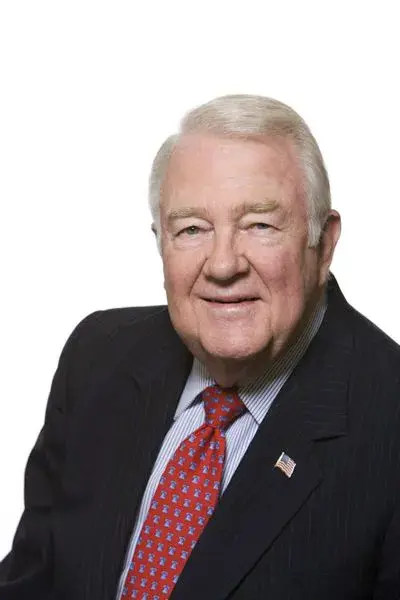
Edwin Meese III is an American attorney, law professor, author and member of the Republican Party who served in official capacities within the Ronald Reagan Gubernatorial Administration (1967–1974), the Reagan presidential transition team (1980–81) and the Reagan White House (1981–1985), eventually rising to hold the position of the 75th United States Attorney General (1985–1988), a position from which he resigned following the Wedtech scandal.
