Lyndon B. Johnson Quotes
You do not take a person who, for years, has been hobbled by chains and liberate him, bring him up to the starting line of a race and then say, "you are free to compete with all the others," and still justly believe that you have been completely fair. We seek not just legal equity but human ability, not just equality as a right and a theory but equality as a fact and equality as a result.
Johnson, Lyndon B. "Commencement Address at Howard University: 'To Fulfill These Rights.'" 4 Jun. 1965. Public Papers of the Presidents of the United States: Lyndon B. Johnson, 1965, Book 2, U.S. Government Printing Office, 1966, p. 636.


As hard as it is for us to imagine today, while her husband was President of the United States, the First Lady wrote a nationally syndicated newspaper column every single day with politics frequently the subject. While she usually agreed with the President, there were occasions where they seemed to not see things exactly the same. She tended to be more liberal than he. However, there were those who believed that when she criticized politicians, it was with FDR’s knowledge and blessing and she sometimes did his “dirty work.” Eleanor Roosevelt was one of the most influential people in the country—certainly more-so than any First Lady before and since.


He was the first FHA administrator to make statements saying that non-discriminatory housing services should be available to the American people. He was not able to change the agency’s equal opportunity performance because the Southern states had laws allowing and protecting legal segregation especially in housing. The Southern staff interpreted his position to be sure that both blacks and whites had access to FHA services, but they used the “separate but equal” doctrine: Provide services to both races but always in segregated housing projects. This was typical of the kinds of problems that motivated the Civil Rights Acts offered by President Kennedy in 1963 and passed by President Johnson in 1964 See {637271} for a similar Mason statement.


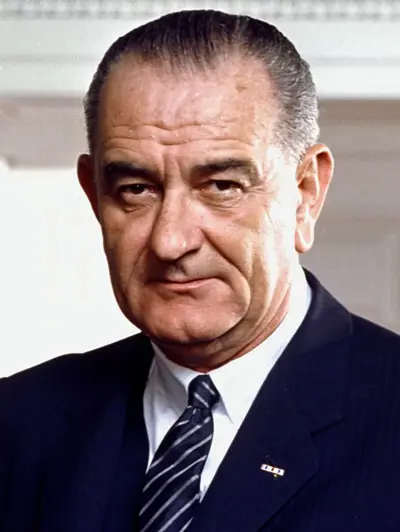
Lyndon Baines Johnson, often referred to by his initials LBJ, was the 36th president of the United States, in office from 1963 to 1969. He served as the 37th vice president from 1961 to 1963 and assumed the presidency following the assassination of President John F. Kennedy. A Democrat from Texas, Johnson was also a United States representative and later majority leader in the United States Senate. Johnson is one of only four people to have served, at various times, in all four federal elected positions.
