Gordon Lloyd Quotes
You can’t read history backward.
He argues that it is erroneous to assume motivation and position of individuals at a particular time or with respect to a particular event based on positions and writings that they take later---excepting memoirs. The particular context of Lloyd’s remark was in response to a question of what Thomas Jefferson’s position might have been on several Constitutional provisions given his correspondence post 1800. Lloyd argues that Jefferson’s trials as President later then shaped his views while at the time of the Constitutional convention, he had not had those experiences and were not influenced by them. People change their minds and political philosophies and there is the ever present exigencies of the day that affect views.
Gordon Lloyd, Historian, Podcast, The Constitutional Convention, April 2006
Sourced by: Eigen's Political and Historical Quotations


This is something that most nations and groups of people indulge in. Democrats considering the New Deal and Republicans expounding on the Presidency of Ronald Reagan are two classic instances. In this case Petri was particularly referring to Southerners who extoll the virtues of the Confederacy and the Confederate soldiers, ignoring the fact that they had committed treason to preserve one of the most cruel and evil institutions in human history. At the same time, they recall every disgraceful act of looting and destruction of Civilian farms and factories and ignore the Northern behavior after the Confederate defeat where no treasonous and rebel army in history had ever escaped not only retribution but all accountability as well. Internationally, almost every conflict in the world is characterized by this behavior on both sides.

Abdul-Jabar was one of the greatest professional basketball players of all time. However, he became a serious historian of Black studies, write a number of books and had an intellectual influence upon young Black men that few people were able to match.


Executed by the English for his part in the Easter Uprising.


Most historians and politicians believe the reverse to be true and that is WHY history should be studied. For them, history is a means to an end. For Taylor’s point of view, it is the end.


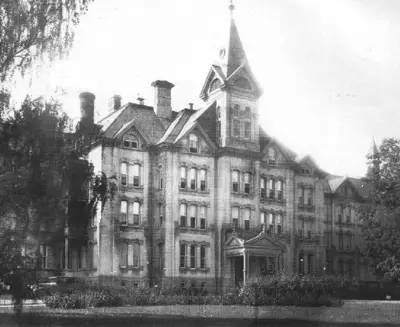
Gordon W. Lloyd was an architect of English origin, whose work was primarily in the American Midwest. After being taught by his uncle, Ewan Christian, at the Royal Academy, Lloyd moved to Detroit in 1858. There he established himself as a popular architect of Episcopal churches and cathedrals in the region, mostly in the states of Michigan, Ohio and Pennsylvania. In addition to churches, Lloyd designed several secular works, such as commercial buildings, residences and an insane asylum. Though his office was in Detroit, Lloyd lived across the river in Windsor, Ontario, Canada.
