Fyodor Dostoevsky Quotes
You cannot imagine what sorrow and anger seize one's whole soul when a great idea, which one has long and piously revered, is picked up by some bunglers and dragged into the street, to more fools like themselves, and one suddenly meets it in the flea market, unrecognizable, dirty, askew, absurdly presented, without proportion, without harmony, a toy for stupid children.
Dostoevsky, Fyodor. Demons. Translated by Richard Pevear and Larissa Volokhonsky, Vintage Books, 1995, p. 24.

In the Dred Scott decision, the Declaration of Independence:


The secretary was responding to a reporter who had dramatically paraphrased what the secretary had said and asked if this would be correct.

Sunday was a leading prohibitionist.


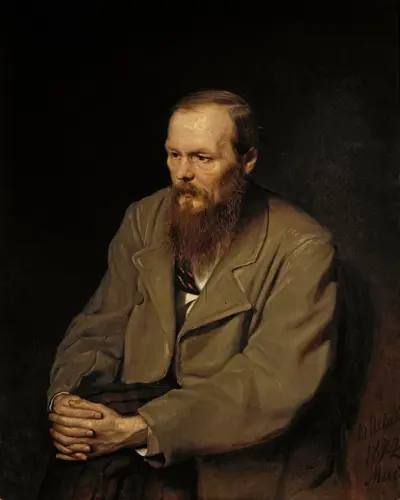
Fyodor Mikhailovich Dostoevsky, sometimes transliterated as Dostoyevsky, was a Russian novelist, philosopher, short story writer, essayist, and journalist. Dostoevsky's literary works explore human psychology in the troubled political, social, and spiritual atmospheres of 19th-century Russia, and engage with a variety of philosophical and religious themes. His most acclaimed works include Crime and Punishment (1866), The Idiot (1869), Demons (1872), and The Brothers Karamazov (1880). Dostoevsky's body of works consists of 12 novels, four novellas, 16 short stories, and numerous other works. Many literary critics rate him as one of the greatest psychological novelists in world literature. His 1864 novel Notes from Underground is considered to be one of the first works of existentialist literature.
