Lowell Bergman Quotes
You can have all the information you want in the world. If you don't have the people raising questions and looking beneath the surface, and people being paid to do this, you're not going to find the answers.
Bergman, Lowell. "Reporting the Truth: Conversation with Lowell Bergman." Interview by Harry Kreisler. Conversations with History, Institute of International Studies, UC Berkeley, 5 Nov. 2001.


The issue under discussion was the fact that the United States Military does not, unlike all civilian courts, maintain a docket of court martials. An interested citizen or a reporter, who usually has a right to attend and observe the proceeding has no way of finding out where and when the proceeding will take place unless the military chooses to inform people or make it public. Courts Martial are legally open to observers except for special circumstances—like civilian criminal trials. However, the military wants as little coverage as possible.

This is a notable quotation illustrating the state of relations between the press and the government under Theodore Roosevelt. Baker was one of the most muckraking of the investigative reports. And previously there were no accommodations for the press in government agencies. Roosevelt and most of his reformist appointees believed that public opinion was crucial to achieving their political objectives and that transparency would do them much more good than harm. Roosevelt and his colleagues had so much success with the press, that every administration since has made accommodations for the press and tried to use the press to promote their agenda. Most Presidents did not have the thick skin of Theodore Roosevelt who had been disrespected by some of the press since Abraham Lincoln. See {640476} for an example. Most Presidential administrations wanted the good press but also wanted to control the bad.


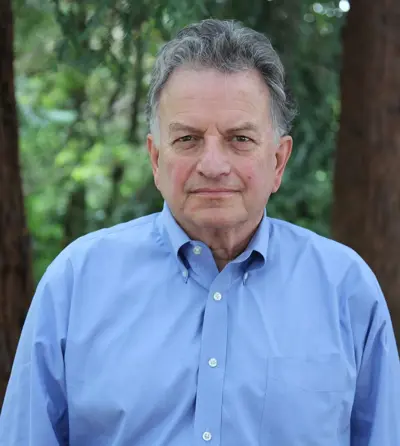
Lowell Bergman is the Emeritus Reva and David Logan Distinguished Chair in Investigative Reporting at the Graduate School of Journalism at UC Berkeley and founder of the Investigative Reporting Program, where he taught lecture classes and then seminars dedicated to investigative reporting for 28 years. He was also a producer/correspondent for the PBS documentary series Frontline. Bergman’s career spans nearly five decades, most notably as a producer, a reporter and then the director of investigative reporting at ABC News and as a producer for CBS's 60 Minutes leaving in 1998 as the senior producer of investigations for CBS News. In 2019, Bergman retired after a 50-year career in journalism.
