Thucydides Quotes
Words had to change their ordinary meaning and to take that which was now given them. Reckless audacity came to be considered the courage of a loyal ally; prudent hesitation, specious cowardice; moderation was held to be a cloak for unmanliness; ability to see all sides of a question, inaptness to act on any. Frantic violence became the attribute of manliness; cautious plotting, a justifiable means of self-defense. The advocate of extreme measures was always trustworthy; his opponent a man to be suspected. To succeed in a plot was to have a shrewd head, to divine a plot a still shrewder; but to try to provide against having to do either was to break up your party and to be afraid of your adversaries.
He was describing Greece during the Peloponnesian War. However, the United States and most other societies have gone through episodes like this at various times in their history where language is twisted for partisan purposes.
Thucydides, c. 460 BC -c. 400 BC, Ancient Greek Historian, History of the Peloponnesian War, Book 3
Sourced by: Eigen's Political and Historical Quotations


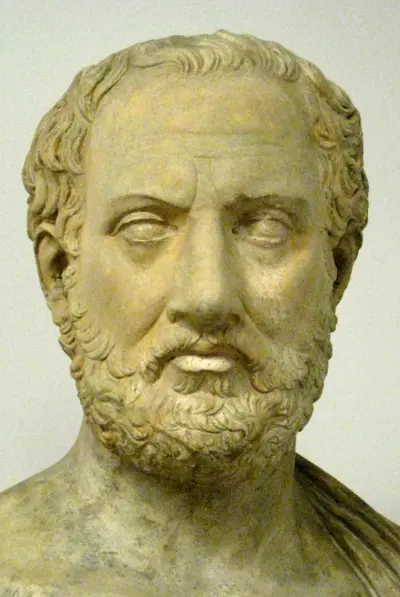
Thucydides (/θjuːˈsɪdɪdiːz/; Ancient Greek: Θουκυδίδης Thoukūdídēs [tʰuːkyːdídɛːs]; c. 460 – c. 400 BC) was an Athenian historian and general. His History of the Peloponnesian War recounts the fifth-century BC war between Sparta and Athens until the year 411 BC. Thucydides has been dubbed the father of "scientific history" by those who accept his claims to have applied strict standards of impartiality and evidence-gathering and analysis of cause and effect, without reference to intervention by the deities, as outlined in his introduction to his work.
