Livy Quotes
Woe to the vanquished. Vae victis.
Titus Livy, 59 BC-17 A.D. Roman Historian, Annals, V
Sourced by: Eigen's Political and Historical Quotations


Halsey was a big supporter of the use of the Atom Bomb against Japan. His ships had battled the Japanese navy from Pearl Harbor to Japan’s eventual surrender and had seen the cruelty of the Japanese occupation and aggression throughout the Pacific. His ships were the first to be sunk by Kamikaze suicide pilots at the Battle of Leyte Gulf where over 3000 American sailors were killed in the battle that finally destroyed the Japanese Navy’s ability to wage war.


This speech was officially prepared and read to the six Indian tribes of the Iroquois Nation. The purpose was to persuade the Iroquois Indians to stay neutral (see {583726}) in the coming conflict with England. The Iroquois had traditionally traded peaceably with the colonists and on many occasions the colonists and the Iroquois had fought against the French and other Indians. Unfortunately, a Mohawk chief, Joseph Brant, had traveled to England and been educated there. He, following the conventional wisdom of the day persuaded most of the Iroquois tribes to join the obvious winner—England—and fight on their side. Only the Oneida tribe resisted Brant’s advice, and joined the revolutionists. The result was a civil, fratricidal war of not only white, but also the Iroquois Indians who had been at peace with each other since any could remember. When the colonists won, the Oneida were warmly embraced and participated in New York and other colonial life and activities. The relationship was so good that a little over 200 years later the average earnings of the Indian in New York State exceeded that of the average white man. The other 5 Iroquois tribes however were attacked and driven out of their traditional territories and they fled with Joseph Brant to English Canada where they have not yet fully recovered their important place in the society.

He argues that since the French Canadians have never won any battles that they have neither the confidence of the will to fight for their independence.


The specific context of the quotation was the Navaho Indians enmity towards Kit Carson which extends to the present.

This illustrates one of the reasons that the Israeli Arab conflict has been unsolvable over the years. A thousand years ago, the Arabs were a leading intellectual and military power in the world. The rest of the world has moved ahead and they have actually retrogressed. So the Arabs seek dignity which is very elusive. They have never wanted to negotiate terms with Israel when they have been weak and feel defeated. So the pattern has been that they feel they cannot negotiate for justice as they are too week. So periodically they attack Israel which has always defeated them and hoped that after the Arab defeat, permanent negotiations for peace could take place. But the Arabs were feeling too weak. So they just repeated all their extreme demands. After a few years, they would try another attack, lose again and the cycle would repeat. The Israelis fear that if the Arabs every won a war, the Arab moderates might be willing to reasonably negotiate, the extremists would want to continue the fighting and “drive the Israelis into the sea” as they have so often threatened.


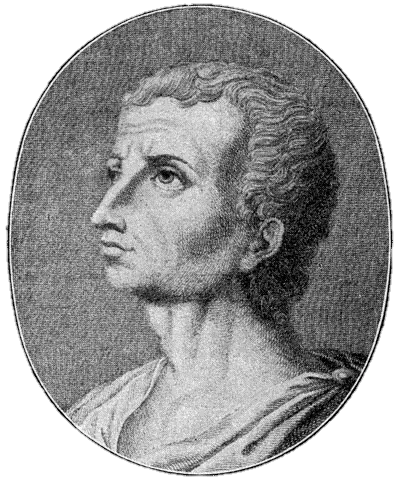
Titus Livius (/ˈlɪviəs/ LIV-ee-əs, Latin: [ˈtɪtʊs ˈliːwijʊs]; 64/59 BC – AD 12/17), known as Livy (/ˈlɪvi/ LIV-ee) in English, was a Roman historian. He wrote a monumental history of Rome and the Roman people, titled Ab Urbe Condita, ''From the Founding of the City'', covering the period from the earliest legends of Rome before the traditional foundation in 753 BC through the reign of Augustus in Livy's own lifetime. He was on familiar terms with members of the Julio-Claudian dynasty and even in friendship with Augustus, whose young grandnephew, the future emperor Claudius, he exhorted to take up the writing of history.
