Joseph Story Quotes
Without justice being freely, fully, and impartially administered, neither our persons, nor our rights, nor our property, can be protected. And if these, or either of them, are regulated by no certain laws, and are subject to no certain principles, and are held by no certain tenure, and are redressed, when violated, by no certain remedies, society fails of all its value; and men may as well return to a state of savage and barbarous independence.
Story, Joseph. Commentaries on the Constitution of the United States. Vol. 3, Hilliard, Gray, and Company, 1833, p. 426.


Catherine II—the Great—appointed a commission to suggest model laws for Russia based on some of the principles of the European Enlightenment. The laws were never officially adopted but they are interesting in that they were the product of “liberal” thinking at the time. This particular definition of “liberty” is similar to that ruse in many country’s modern constitutions which will “guarantee” a right like freedom of speech so long as it does not violate any laws.


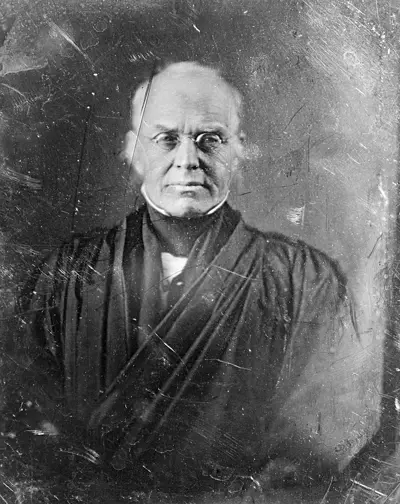
Joseph Story was an American lawyer and jurist who served on the Supreme Court of the United States from 1812 to 1845, during the Marshall Court and early-Taney Court eras. He is most remembered for his opinions in Martin v. Hunter's Lessee and The Amistad case, and especially for his magisterial Commentaries on the Constitution of the United States, first published in 1833. Dominating the field in the 19th century, this work is a cornerstone of early American jurisprudence. It is the second comprehensive treatise on the provisions of the U.S. Constitution and remains a critical source of historical information about the forming of the American republic and the early struggles to define its law.
