Joseph de Maistre Quotes
Without doubt, God is the universal moving force, but each being is moved according to the nature that God has given it. God directs angels, men, animals, brute matter, in sum all created things, but each according to its nature: and man having been created free, he is led freely.
de Maistre, Joseph. Considerations on France. Translated by Richard A. Lebrun, Cambridge University Press, 1994, p. 3.


By morally subjugating the existing laws, the scriptures, public opinion to the law of nature, Spinoza distressed many of the clerics and civil authorities of the day. Spinoiza's views were so threatenting to the established religious authorities that he was the only man in history to have been excommunicated by the Jews, the Catholics and the Muslims.


Spinoza was one of the most feared intellectuals in human history—feared that is by the established power structures. He is the only known person who was excommunicated by the Catholics, the Jews and the Muslims. He was the enemy of authority and advocated personal reason as the guide for men.
It was Spinoza’s insistence that man should be free and use reason rather than faith and not to adhere to authority that got him excommunicated by the Jews, The Catholics and the Muslims, the only such man in history. Authority per se was evil if it was listened to.

This is a very important historical quotation regarding the conflict between Science and Religion. What this quotation shows it that the accusation that the study of science undermined religious belief was a common accusation in the 17th century as well as today. Here Boyle gives the best argument against the accusation, However, despite the fact that this then seemed to be an irrefutable argument and it seems so today even, the accusation is continuously made with small fundamentalist religious factions attempting to reduce the influence of science on society.


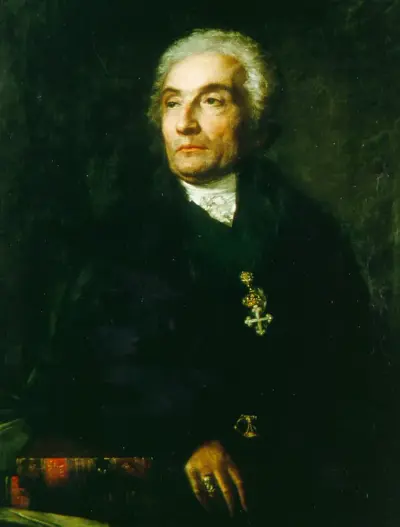
Joseph-Marie, comte de Maistre was a Savoyard philosopher, writer, lawyer and diplomat who advocated social hierarchy and monarchy in the period immediately following the French Revolution. Despite his close personal and intellectual ties with France, Maistre was throughout his life a subject of the Kingdom of Sardinia, which he served as a member of the Savoy Senate (1787–1792), ambassador to Russia (1803–1817) and minister of state to the court in Turin (1817–1821).
