Wole Soyinka Quotes
With theatre, you can interpret the most complex play on stage for it have meaning to an audience because you're dealing in images, you're dealing in action, you can use different idioms to interpret and clarify something which is obscured in the reading and of course there are different kinds of play, there are mythological plays, there are what I call the dramatic sketches, direct political theatre which is virtually everybody, but I find that you can use the stage as a social vehicle, you know, which any kind of audience.
Soyinka, Wole. Interview by the Academy of Achievement. Academy of Achievement, 9 June 2005.


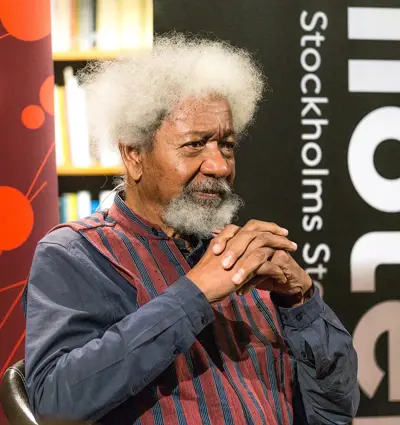
Akinwande Oluwole Babatunde Soyinka, known as Wole Soyinka (pronounced [wɔlé ʃójĩnká]), is a Nigerian playwright, novelist, poet, and essayist in the English language. He was awarded the 1986 Nobel Prize in Literature, the first sub-Saharan African to be honoured in that category. Soyinka was born into a Yoruba family in Abeokuta. In 1954, he attended Government College in Ibadan, and subsequently University College Ibadan and the University of Leeds in England. After studying in Nigeria and the UK, he worked with the Royal Court Theatre in London. He went on to write plays that were produced in both countries, in theatres and on radio. He took an active role in Nigeria's political history and its struggle for independence from Great Britain. In 1965, he seized the Western Nigeria Broadcasting Service studio and broadcast a demand for the cancellation of the Western Nigeria Regional Elections. In 1967, during the Nigerian Civil War, he was arrested by the federal government of General Yakubu Gowon and put in solitary confinement for two years.
