Francis Rakoczi II Quotes
With God for Home and Freedom
The Revolution was not successful.
Francis Rakoczi II,1676-1735, Prince of Transylvania, Slogan in the Kuruc War of Independence, 1703-1711
Sourced by: Eigen's Political and Historical Quotations


After being castigated by the Pope, Lameddais broke with the Church and concentrated on publishing and politics.

At the time the Algerians leading the impendence movement were very secular, and were committed to modernity, multiculturalism and religious freedom and tolerance. Within Algerian Muslim society, there has been a constant battle against the right wing Islamic extremists and terrorists.


David Ben Gurion and the secular Jews did not want the word “God” as a justification of their independence and the more orthodox did. The phrase allowed each group to interpret it in whatever way they wanted.


Surprisingly to most people these words were never on American paper money until 1957when it was put there by Congress in the midst of one of the many Congressional “Culture Wars”. See {641647}.

These three concepts have in one way or another been made state virtues in right wing dictatorships in religious nations. Ironically, the same can be said about conservative factions and parties in democracies. They include two groups: Those who feel that these are important civic virtues and that the dictators often hijack the virtues to support their dictatorship. The other group are themselves would be fascists who are trying to emulate the dictators of the 20th century. Left wing parties in modern democracies also value these virtues but tend not to use them in slogans as many associate the language with Salazar and other dictators. Some Fascist governments were anti religious such as Nazi Germany, and others were strong religious advocates which co-opt the established church such as Salazar and Franco of Spain.


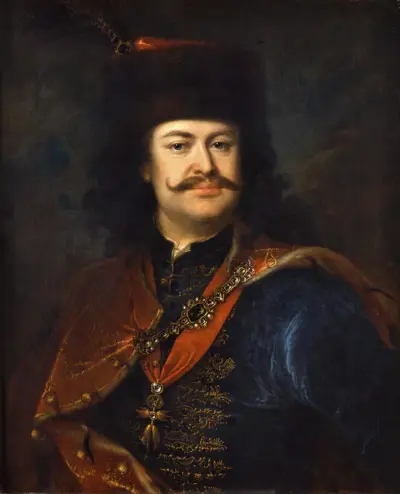
Francis II Rákóczi was a Hungarian nobleman and leader of the Hungarian uprising against the Habsburgs in 1703-11 as the prince (Hungarian: fejedelem) of the Estates Confederated for Liberty of the Kingdom of Hungary. He was also Prince of Transylvania, an Imperial Prince, and a member of the Order of the Golden Fleece. Today he is considered a national hero in Hungary.
