Jorge Luis Borges Quotes
Why do you seem so annoyed at what I'm saying?" "Because we're too much like each other. I loathe your face, which is a caricature of mine, I loathe your voice, which is a mockery of mine, I loathe your pathetic syntax, which is my own.
Borges, Jorge Luis. The Book of Sand. Translated by Norman Thomas di Giovanni, E. P. Dutton, 1977, p. 19.

FDR was hated by conservatives to a degree that no President in modern history was or would be until Bill Clinton served in that role. Both men were amazingly successful with their programs and administration of the government.


Expressing his feeling regarding President Grover Cleveland who failed to deal with serious economic problems:


Kennedy (the father of JFK) was U.S. Ambassador of Britain at a critical time in history—the rise of Nazism. To Roosevelt and most other’s surprise, Kennedy turned out to be a Nazi sympathizer. He was complimentary towards Hitler and Mussolini, an advocate for fascism. He had been a producer of films and he tried to pressure American film-makers not to make films depicting Hitler and Nazi Germany in a less than favorable light. He supported Charles Lindbergh and American Fascists and conspired with the English upper class supporters of Hitler and Fascism. He had publicly and privately argued against Lend Lease and military aid to England. Roosevelt, an incredibly persuasive leader, had invited him to Hyde Park to straighten out what he thought was a misunderstanding. The two men were in a room alone for 10 minutes when Roosevelt sought his wife and made the statement. Kennedy of course resigned. FDR never spoke to him again.

Describing the bitter situation when Theodore Roosevelt contested William Howard Taft for the Republican 1912 presidential nomination:


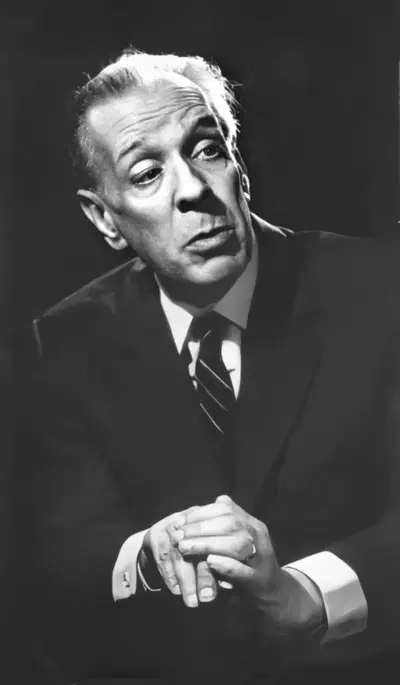
Jorge Francisco Isidoro Luis Borges Acevedo was an Argentine short-story writer, essayist, poet and translator, and a key figure in Spanish-language and universal literature. His best-known books, Ficciones (Fictions) and El Aleph (The Aleph), published in the 1940s, are compilations of short stories interconnected by common themes, including dreams, labyrinths, philosophers, libraries, mirrors, fictional writers, and mythology. Borges' works have contributed to philosophical literature and the fantasy genre, and have been considered by some critics to mark the beginning of the magic realist movement in 20th century Latin American literature. His late poems converse with such cultural figures as Spinoza, Camões, and Virgil.
