Friedrich Nietzsche Quotes
Whoever has overthrown an existing law of custom has always first been accounted a bad man: but when, as did happen, the law could not afterwards be reinstated and this fact was accepted, the predicate gradually changed; - history treats almost exclusively of these bad men who subsequently became good men!
Nietzsche, Friedrich. Daybreak: Thoughts on the Prejudices of Morality. Translated by R. J. Hollingdale, Cambridge University Press, 1997, p. 18.


There had been a major labor strike in the textile mills of Lawrence. Ettor was one of the major strike leaders and strategists. The city authorities sided totally with the mill owners and used police and militia to try and break the strike. When one of the strikers was shot and killed (historians generally agree that the police had fired the shot), the authorities used the death to incapacitate the leadership of Ettor and two other “socialist” leaders who were professional strike organizers and leaders. The 3 were arrested and charged with murder, firing the shot that killed the striker. Ettor and the others were miles away at the time giving speeches to the strikers at another mill. None-the-less, they were arrested, jailed, and not even tried until after the strike was ended. The three were quickly acquitted. The jailing of the strike leaders backfired and made the strikers even more resolute. The laborers finally won the concessions, not to have their pay cut. The defendants went on to lead other strikes.


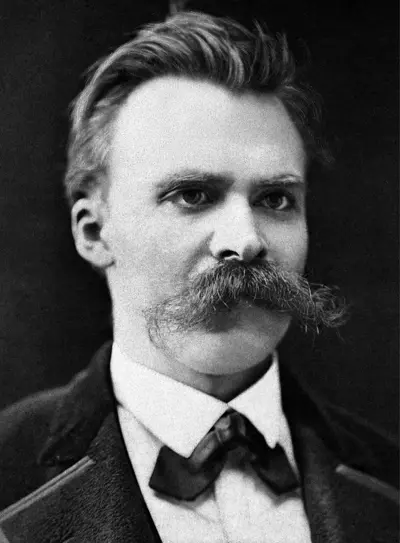
Friedrich Wilhelm Nietzsche was a German philosopher, cultural critic, composer, poet, writer, and philologist whose work has exerted a profound influence on modern intellectual history. He began his career as a classical philologist before turning to philosophy. He became the youngest person ever to hold the Chair of Classical Philology at the University of Basel in 1869 at the age of 24. Nietzsche resigned in 1879 due to health problems that plagued him most of his life; he completed much of his core writing in the following decade. In 1889, at age 44, he suffered a collapse and afterward a complete loss of his mental faculties. He lived his remaining years in the care of his mother until her death in 1897 and then with his sister Elisabeth Förster-Nietzsche. Nietzsche died in 1900.
