Lee de Forest Quotes
While theoretically and technically television may be feasible, commercially and financially I consider it an impossibility.
Lee Deforest, 1873-1961 Scientist & inventor, Referred to as the “father of radio”, Quoted in New York Times, September 12, 1926
Sourced by: Eigen's Political and Historical Quotations


His father Cornelius, one of the great, creative industrialists of America, was not at all of the same mindset and saw corporations and the Railroads as having an important role in America with substantial obligations to the society which enabled the economic development and supported the railroads. He described his son as a “blockhead”. William goes down in American history as the arrogant industrialist and capitalist whose wealth was produced by his talent of being born to the right father who built the great empire.

Media inventors seem to have an overly optimistic view of the invention’s effect. See {635263}.

Prior to Baxter the issues in prosecuting an anti-trust case were whether or not the company met the size or market share criterion for application of the anti-trust law and whether the company had committed any of the prohibited acts. Baxter added another hurdle. Namely, that the prosecution must make economic sense for the company, the consumer and/or the nation. Many illegal, immoral and unfair antitrust practices were not prosecuted if there was no economic benefit to doing so. Critics of the new policy argued that nowhere in the language of the anti-trust legislation that prosecution should not take place in the absence of demonstrable economic benefit.

Nixon shortly thereafter hired Ailes to run his television campaign operations. At the time, there was still much debate as to whether television had any serious place in political campaigning. Ailes was not only ahead of his time conceptually, but developed many of the basic techniques that politicians used with television for years thereafter.


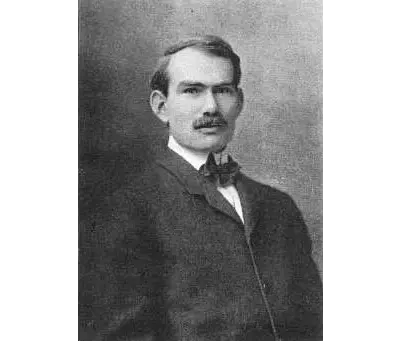
Lee de Forest was an American inventor and early pioneer in radio and in the development of sound-on-film recording used for motion pictures. He had over 180 patents, but also a tumultuous career—he boasted that he made, then lost, four fortunes. He was also involved in several major patent lawsuits, spent a substantial part of his income on legal bills, and was even tried (and acquitted) for mail fraud. His most famous invention, in 1906, was the three-element "Audion" (triode) vacuum tube, the first practical amplification device. Although De Forest had only a limited understanding of how it worked, it was the foundation of the field of electronics, making possible radio broadcasting, long distance telephone lines, and talking motion pictures, among countless other applications.
