Judith Butler Quotes
Where is democratic process or popular sovereignty for the endangered population? It cannot be "given" or "allocated" by some other power without that same power claiming the right to withdraw what it gives.
Butler, Judith, and Athena Athanasiou. Dispossession: The Performative in the Political. Polity Press, 2013.


The United States was opposed to elections at the beginning of the Vietnam war. The Viet Min, the Russian and Chinese recognized government of Ho Chi Min, was extremely well organized as a result of their cohesive organization and victory over the French Colonialists. At the urging of the French, we supported the previous Vietnam Emperor who the French had supported. However his popularity was limited to Saigon and French Colonial centers. The majority of the population saw him as the collaborator who was propped up by the hated French. There was no way that the Communist Viet Min would lose in an election. There had been no time for the people to see what peacetime living under the communists was like, and what they knew of the Emperor, they did not like. It was important to keep Vietnam from falling into the hands of the Communists. Once they won one election they would control the machinery of government to be sure that they won all subsequent elections even if the people wanted a change in government. The German newspaper thought that we should stick to our principles and allow a free election and live with the consequences. In retrospect, we would be where we ended up anyway with the Communist Viet Min in totalitarian control of the country and we would have saved many lives and much money.


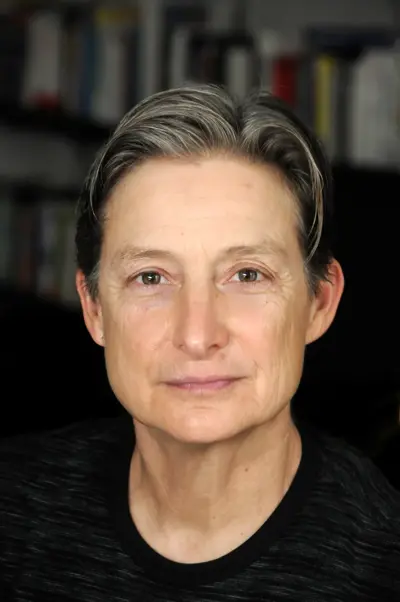
Judith Pamela Butler is an American philosopher and gender theorist whose work has influenced political philosophy, ethics, and the fields of third-wave feminist, queer, and literary theory. In 1993, Butler began teaching at the University of California, Berkeley, where they have served, beginning in 1998, as the Maxine Elliot Professor in the Department of Comparative Literature and the Program of Critical Theory. They are also the Hannah Arendt Chair at the European Graduate School.
