Robert Mapplethorpe Quotes
Whenever you make love to someone, there should be three people involved - you, the other person, and the devil.


Supporting government curbs on pornography:

The Spanish had brought the potato back from the New world in the 16th century. However, Europeans did not change their food customs easily and the potato was not a major food. The fact that it was always in the dirt did not give an aura of cleanliness. The exact theology of the Church causing such opposition to the potato may have been the fact that eating the clean green leaves would sicken humans and sometimes kill them. Another theory was brought on by the Little Ice Age which caused the usual grain crops to fail. The cold weather was clearly a punishment by God for man’s sins. However, the potato would survive the very cold winters when God wanted the people’s crops to fail. Therefore, the Devil must be protecting the potato and thwarting Gods will. Hence, it was the Devil’s plant. The Little Ice Age was so extreme that there was almost no food available for the winter and starvation—the wrath of God—was rampant. People in desperation turned to the Devil’s plant and it saved millions of lives. Shortly, in countries like Ireland, the potato became the major source of food and nutrition, despite the church. However, after a while the prelates were starving also, and decided that the potato might not be the Devil’s plant after all. The king of France would publicly eat potatoes to get his people to plant and eat the new crop which had saved Germany and other parts of Europe.


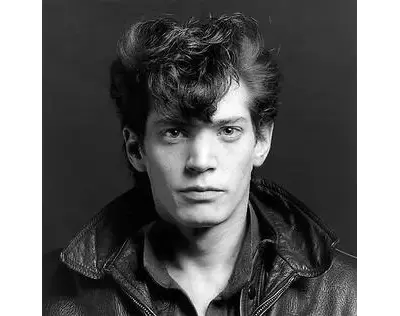
Robert Michael Mapplethorpe was an American photographer, best known for his black-and-white photographs. His work featured an array of subjects, including celebrity portraits, male and female nudes, self-portraits, and still-life images. His most controversial works documented and examined the gay male BDSM subculture of New York City in the late 1960s and early 1970s. A 1989 exhibition of Mapplethorpe's work, titled Robert Mapplethorpe: The Perfect Moment, sparked a debate in the United States concerning both use of public funds for "obscene" artwork and the Constitutional limits of free speech in the United States.
