Bill McKibben Quotes
Whenever anyone challenges anything, the powers that be try to paint them as extremists or radicals or whatever. And I think that's actually nonsense.


Such intellectuals as Max Eastman. John Dos Passos, and James Rorty were officially so classified.


The “burning” is a reference to the range of murders from the burning of heretics in the Middle Ages to the crematorium ovens of the German Concentration Camps in the Holocaust of WWII.

Islam had been the center of intellectual thought in the world, until the clerics had decided that innovation itself was a sin and one that called for the death penalty. Although most non-Muslim religions went through stages of death for religious dissent. However, the Koran deals with every part of society. There is no separation of church and state. All knowledge is in the Koran the fundamentalist believes and anyone who expresses a new idea is not only wrong and a heretic, but is dangerous and must be executed. It is therefore not very surprising that the Islamic contributions to science, medicine, and the arts has been so small. The Islamic fundamentalists are opposed by Muslim modernists who try to change the Islamic culture but they are on the minority. Most religions have gone through bad earlier periods where dissent was heresy and warranted death. Fundamentalist Islam is the only one which bans original thought of any kinds even it does not contradict established doctrine.

Egypt, after is Arab Spring ousting of it like time military dictator, suffered through and Islamic government regeime, but after that ended up electing a military strongman again who had little inclination towards democracy and was decidedly fascistic. In November 2013, the Robert F. Kennedy Center for Justice and Human Rights presented Omran with an award to honor her work and commitment to human rights in Egypt.


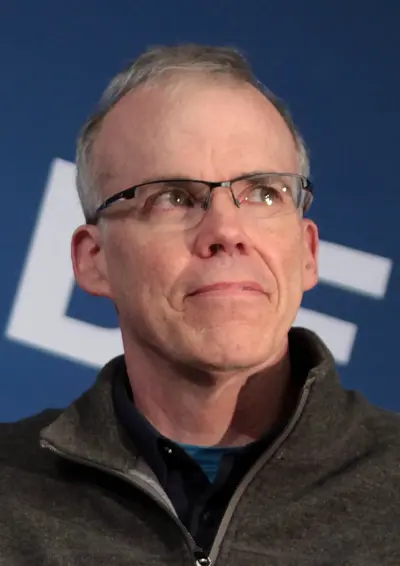
William Ernest McKibben is an American environmentalist, author, and journalist who has written extensively on the impact of global warming. He is the Schumann Distinguished Scholar at Middlebury College and leader of the climate campaign group 350.org. He has authored a dozen books about the environment, including his first, The End of Nature (1989), about climate change.
