Wole Soyinka Quotes
When you are looking for corruption, you should look at the entire stratum of the society, while some forms of corruption are direct, others are indirect.
Soyinka, Wole. Interview. Channels Television, 2018.


The leaders and creators of these anti-corruption organizations get kickbacks from corrupt officials and organizations to be sure that they do not get investigated and exposed. In some cases they frame an honest politician who would not pay them and accuse him of corruption to show the public that they are cracking down on corruption. Or they go after corrupt politicians who are going against the regime on political matters. Not all anti-corruption and reform organizations are corrupt themselves, but many are. But the methods of corruption thoughout the world are becoming more and more sophisticated as the simple forms are being exposed by media and reform groups.
This was a best seller when published in China. It is surprising to many that the Chinese censors even allowed it to be published.


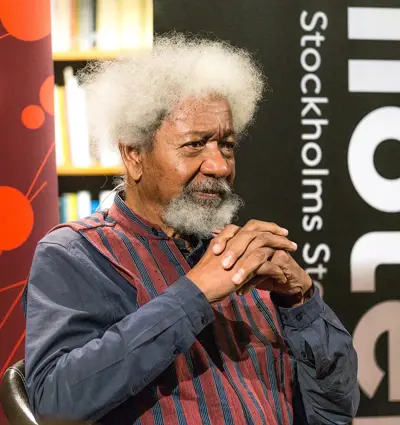
Akinwande Oluwole Babatunde Soyinka, known as Wole Soyinka (pronounced [wɔlé ʃójĩnká]), is a Nigerian playwright, novelist, poet, and essayist in the English language. He was awarded the 1986 Nobel Prize in Literature, the first sub-Saharan African to be honoured in that category. Soyinka was born into a Yoruba family in Abeokuta. In 1954, he attended Government College in Ibadan, and subsequently University College Ibadan and the University of Leeds in England. After studying in Nigeria and the UK, he worked with the Royal Court Theatre in London. He went on to write plays that were produced in both countries, in theatres and on radio. He took an active role in Nigeria's political history and its struggle for independence from Great Britain. In 1965, he seized the Western Nigeria Broadcasting Service studio and broadcast a demand for the cancellation of the Western Nigeria Regional Elections. In 1967, during the Nigerian Civil War, he was arrested by the federal government of General Yakubu Gowon and put in solitary confinement for two years.
