C. V. Raman Quotes
When we consider the fact that nearly three-quarters of the surface of the globe is covered by oceanic water, we begin to realise that the molecular scattering of light in liquids may possess an astronomical significance, in fact contribute in an important degree to the observed albedo of the earth.
Raman, C. V. "The Molecular Scattering of Light in Water and the Colour of the Sea." Proceedings of the Royal Society of London. Series A, vol. 101, no. 708, 1922, p. 64.


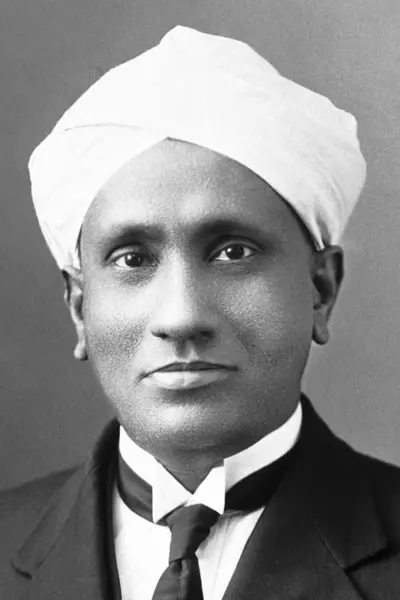
Sir Chandrasekhara Venkata Raman was an Indian physicist known mainly for his work in the field of light scattering. With his student K. S. Krishnan, he discovered that when light traverses a transparent material, some of the deflected light changes wavelength and amplitude. This phenomenon was a new type of scattering of light and was subsequently termed as the Raman effect (Raman scattering). Raman won the 1930 Nobel Prize in Physics and was the first Asian person to receive a Nobel Prize in any branch of science.
