Yukio Mishima Quotes
When a captive lion steps out of his cage, he comes into a wider world than the lion who has known only the wilds. While he was in captivity, there were only two worlds for him - the world of the cage, and the world outside the cage. Now he is free. He roars. He attacks people. He eats them. Yet he is not satisfied, for there is no third world that is neither the world of the cage nor the world outside the cage.
Mishima, Yukio. The Decay of the Angel. Translated by Edward G. Seidensticker, Knopf, 1974.


The presidents had announced that they would resume diplomatic relations and allow trade, tourism, and other exchange after 40 years of U. S. policy boycotting Cuba to produce more democratic reform and regime change. Fidel Castro, however, became the longest serving ruler or leader of any country in the world, and despite (some argue because of) the boycott was also one of the most popular leaders. The boycott was based on faulty intelligence and after 40 years of no results, President Obama's administration reversed the historical policy that had not been working though there were some American Castro haters who objected to the change arguing that with more time and the death of Fidel Castro who was ill at the time, the boycott would be effective and then we could negotiate for something in exchange for lifting the boycott.


One month later, on January 1, 1863, Lincoln issued the final Emancipation Proclamation freeing the slaves in the Confederate states


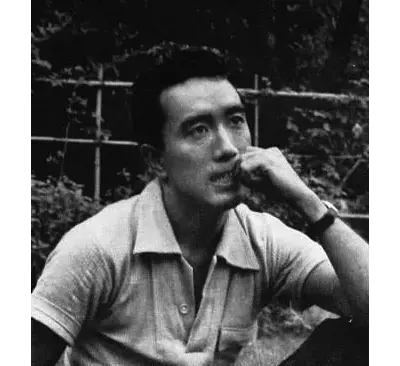
Yukio Mishima, born Kimitake Hiraoka (平岡 公威, Hiraoka Kimitake) was a Japanese author, poet, playwright, actor, model, Shintoist, nationalist, and founder of the Tatenokai (楯の会, "Shield Society"), an unarmed civilian militia. Mishima is considered one of the most important Japanese authors of the 20th century. He was considered for the Nobel Prize in Literature in 1968, but the award went to his countryman and benefactor Yasunari Kawabata. His works include the novels Confessions of a Mask (仮面の告白, Kamen no kokuhaku) and The Temple of the Golden Pavilion (金閣寺, Kinkaku-ji), and the autobiographical essay "Sun and Steel" (太陽と鉄, Taiyō to tetsu). Mishima's work is characterized by "its luxurious vocabulary and decadent metaphors, its fusion of traditional Japanese and modern Western literary styles, and its obsessive assertions of the unity of beauty, eroticism and death".
