Bernard Baruch Quotes
Whatever the amount may be, it is an obligation we cannot escape. It is a part of the obligation that the rich nations of the world, particularly America, must carry out.
Of foreign aid after World War I:
Bernard Baruch, 1870-1965, Businessman & Chairman, War Industries Board, U. S. Delegate to U.N. Atomic Energy Commission, Letter to President Woodrow Wilson, May 7, 1919
Sourced by: Eigen's Political and Historical Quotations


There are some in America who believe that progressive taxation where the rich pay at a higher rate was an invention of the New Deal and FDR. As this quotation shows, it was a well understood and debated concept before there was a United States.


This important statement would not have been a noteworthy quote as so many have said it before, except for the fact that she was writing as a spokesperson of Nationalist China and she was the wife of the Nationalist Party leader, Chiang Kai-Shek. And the great failure of Chiang’s governance was the corruption and the excessive exploitation of the Chinese people by the wealthy. Madame Chaing, educated at Vassar College, knew just what to say to Americans and she mustered incredible support for the Nationalist cause most of which would never have been forthcoming if Americans knew the truth about the Nationalist Government. It was so corrupt, that the vast majority of the people aided the Communists in defeating Chaing, expelling him from the mainland, and relegating his government to Taiwan. Madame Chaing’s hypocrisy was legend. See {615696}.


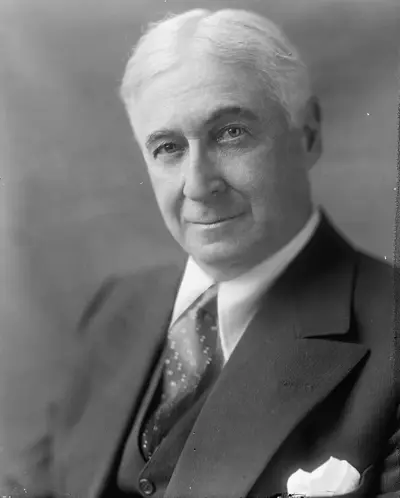
After amassing a fortune on the New York Stock Exchange, he impressed President Woodrow Wilson by managing the nation's economic mobilization in World War I as chairman of the War Industries Board. He advised Wilson during the Paris Peace Conference. He made another fortune in the postwar bull market, but foresaw the Wall Street crash and sold out well in advance. In World War II, he became a close advisor to President Roosevelt on the role of industry in war supply, and he was credited with greatly shortening the production time for tanks and aircraft. Later he helped to develop rehabilitation programs for injured servicemen. In 1946, he was the United States representative to the United Nations Atomic Energy Commission, though his Baruch Plan for international control of atomic energy was rejected by the Soviet Union.
