Oliver Joseph Lodge Quotes
Whatever life may really be, it is to us an abstraction: for the word is a generalised term to signify that which is common to all animals and plants, and which is not directly operative in the inorganic world.
Lodge, Oliver. Life and Matter. Williams and Norgate, 1905, p. 132.


The law is far behind science in many areas, but one dramatic one is the notion of life itself. For the criminal law and for benefits entitlement, when life begins and when it ends are traditionally important. Yet is a very complex question in many cases. Abortion is another controversial area. Under ancient Jewish Law, a fetus is considered a living person when the crown of the head can be viewed from the mother’s vagina. Modern science has demonstrated that depending on how you define life, the fetus itself is alive during the pregnancy. But if one goes further with modern science, the sperm and egg cells are alive before conception. So are millions of other cells in the human body which we kill routinely—some intentionally as when we take an antibiotic to terminate “undesirable” bacteria. Many orthodox Hindus who will not kill living animals will kill living cells such as when they eat yogurt. Scientists have in recent times resisted trying to define the term “living” not only because of its complexity, but because almost any definition would soon be obsoleted by new knowledge which is accumulating so rapidly. Science simplifies and clarified many phenomena, but also makes others much more complex.


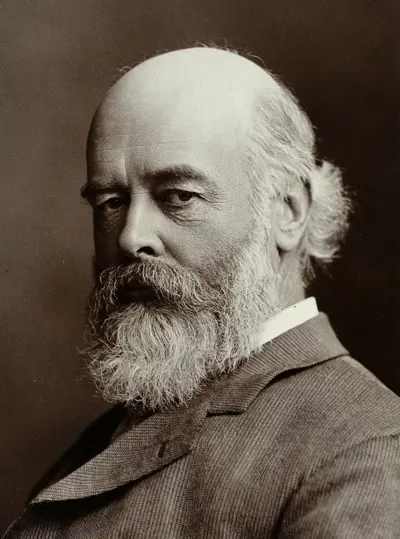
Sir Oliver Joseph Lodge, FRS was a British physicist and writer involved in the development of, and holder of key patents for, radio. He identified electromagnetic radiation independent of Hertz's proof and at his 1894 Royal Institution lectures ("The Work of Hertz and Some of His Successors"), Lodge demonstrated an early radio wave detector he named the "coherer". In 1898 he was awarded the "syntonic" (or tuning) patent by the United States Patent Office. Lodge was Principal of the University of Birmingham from 1900 to 1920.
