Noam Chomsky Quotes
What the US does is the kind of thing I described in Italy in 1948. Case after case like that, not hacking or spreading rumors in the media; but saying look, we're going to starve you to death or kill you or destroy you unless you vote the way we want. I mean that's what we do.
Chomsky, Noam. Global Discontents: Conversations on the Rising Threats to Democracy. Metropolitan Books, 2017.


Many critics of the neoconservatives like Perle observed that if we were negotiating with friends and allies and they made demands or exacted a high price for what we wanted, this was viewed as diplomacy and give and take was appropriate. But when states which were not friends and whose government we did not approve of, made demands or exacted a high price for what we wanted, this was viewed as “blackmail” and should never be acceded to. Negotiations with those states those became extremely difficult if neoconservatives were controlling or influencing the negotiating tactics and strategy.

Referring to Chilean dictator Augusto Pinochet:


Prior to Germany Declaring War on the United States, there was a small but influential group of American Fascists who were great admirers of Hitler and Mussolini and the “reforms” they had made in Germany and Italy. They saw Germany’s invasion of other European nations as a good think to “reform” Europe. The opposed American support of England and U. S. entry into the war. Their influence waned after Pearl Harbor and Germany declaring war on the U. S. Many of them arose again after WWII ended but they no longer expressed admiration for Hitler and Mussolini—concentrating at that time on anti-communisim. This caused some difficulties for the majority of anti communists who were also anti fascists.

Following the sinking of the battleship Maine in Cuba in 1898, Hearst, then a newspaper publisher, dispatched artist Frederic Remington to Cuba to paint war scenes for Hearst's newspapers. Remington could not find any and so cabled Hearst. This was Hearst’s famous reply. Hearst's newspapers then all called for war, and Congress shortly thereafter declared such,

Haldeman had actually called the network executives on several occasions regarding Cavett’s show. Nixon was particularly furious when Cavett interviewed John Kerry, the decorated soldier who had thrown his medals away in protest to the handling of the Vietnam War. Nixon wanted some stronger actions taken.


Most of the Southern racist members of Congress really did see any demonstration for civil rights as a threat—a threat to the Southern white way of life. And the threat was that most fair minded Americans would be exposed to the evils of segregation and pass Civil Rights legislation. Most of the other members of Congress totally rejected this explanation of why the legislation was being debated. See {637396} .

The strongman president, barred from a 3rd 5 year term by the Burundi Constitution, came up with an absurd argument as to why the limit should not apply to him. When the Supreme Court would not go along with the scheme, he threatened them and finally they all reversed their previous opinion and voted to allow it—all except for Nimpagaritse who did not sign the reversal, but was no longer safe. Although the President tried to arrest him, he escaped over the border and went inti exile.


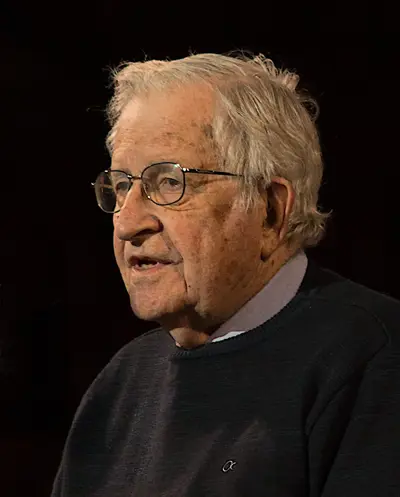
Avram Noam Chomsky is an American linguist, philosopher, cognitive scientist, historian, social critic, and political activist. Sometimes called "the father of modern linguistics", Chomsky is also a major figure in analytic philosophy and one of the founders of the field of cognitive science. He is Laureate Professor of Linguistics at the University of Arizona and Institute Professor Emeritus at the Massachusetts Institute of Technology (MIT), and is the author of more than 150 books on topics such as linguistics, war, politics, and mass media. Ideologically, he aligns with anarcho-syndicalism and libertarian socialism.
