Richard Wagner Quotes
What Music expresses is eternal, infinite, and ideal; she expresses not the passion, love, desire, of this or that individual in this or that condition, but Passion, Love, Desire itself, and in such infinitely varied phases as lie in her unique possession and are foreign and unknown to any other tongue...So...Here's to Victory, gained by our higher sense over the worthlessness of the vulgar! To Love, which crowns our courage...To the day, to the night!...And three cheers for Music.
Wagner, Richard. Richard Wagner's Prose Works, Volume 7: In Paris and Dresden. Translated by William Ashton Ellis, Kegan Paul, Trench, Trübner & Co., 1898, p. 75.


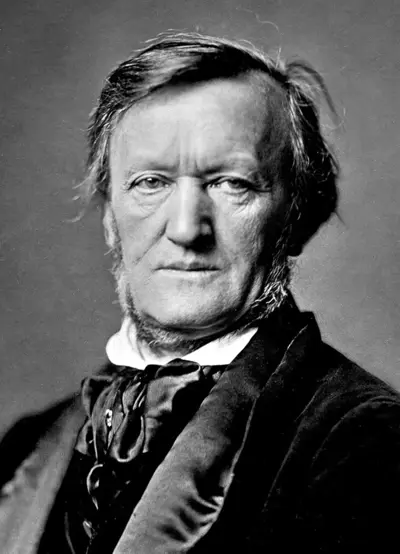
Wilhelm Richard Wagner was a German composer, theatre director, polemicist, and conductor who is chiefly known for his operas (or, as some of his mature works were later known, "music dramas"). Unlike most opera composers, Wagner wrote both the libretto and the music for each of his stage works. Initially establishing his reputation as a composer of works in the romantic vein of Carl Maria von Weber and Giacomo Meyerbeer, Wagner revolutionised opera through his concept of the Gesamtkunstwerk ("total work of art"), by which he sought to synthesise the poetic, visual, musical and dramatic arts, with music subsidiary to drama. He described this vision in a series of essays published between 1849 and 1852. Wagner realised these ideas most fully in the first half of the four-opera cycle Der Ring des Nibelungen (The Ring of the Nibelung).
