Hippocrates Quotes
What I may see or hear in the course of the treatment or even outside of the treatment in regard to the life of men, which on no account one must spread abroad, I will keep to myself holding such things shameful to be spoken about.
Hippocrates. "The Oath." Hippocrates, vol. 1, translated by W. H. S. Jones, Harvard University Press, 1923, p. 301.


The Time Magazine Reporter, Hugh Sidey had just leaked the results of a Time poll to Kissinger, who promised to keep it to himself. The poll showed Nixon way ahead in the election. No sooner had Kissinger ended his conversation with Sidey than he shared the poll information with Haldeman. In this fascinating quotation Kissinger breaks his promise to Sidey, but lets Haldeman know that he is doing so. This is an example of the insight the Watergate tapes give us into political behavior where leading public officials think nothing about going back on their word, but they even gain esteem from their colleagues in doing so. It also illustrates a common but not very well known practice regarding leaking. The press not only utilize leaks from high administration officials but in many cases they return the favor and leak information about what stories they are working on, editorials coming or—as in this case—the results of polls. The leaking is not only one way in politics, but the press also leaks to increase the personal bond with the government leakers by reciprocating.


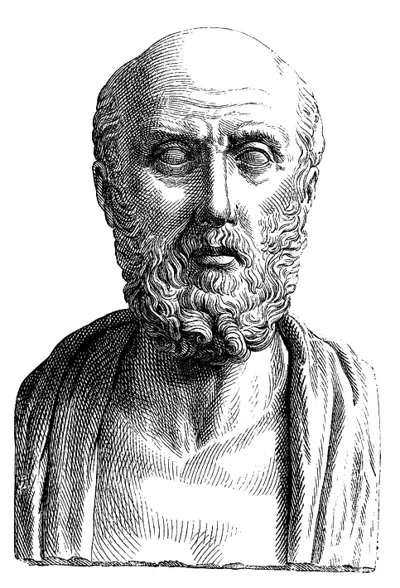
Hippocrates of Kos (/hɪˈpɒkrətiːz/; Greek: Ἱπποκράτης ὁ Κῷος, translit. Hippokrátēs ho Kṓos; c. 460 – c. 370 BC), also known as Hippocrates II, was a Greek physician of the Age of Pericles (Classical Greece), who is considered one of the most outstanding figures in the history of medicine. He is traditionally referred to as the "Father of Medicine" in recognition of his lasting contributions to the field, such as the use of prognosis and clinical observation, the systematic categorization of diseases, or the formulation of humoural theory. The Hippocratic school of medicine revolutionized ancient Greek medicine, establishing it as a discipline distinct from other fields with which it had traditionally been associated (theurgy and philosophy), thus establishing medicine as a profession.
