Imre Kertesz Quotes
What I discovered in Auschwitz is the human condition, the end point of a great adventure, where the European traveler arrived after his two-thousand-year-old moral and cultural history.
Kertész, Imre. "Nobel Lecture: Heureka!" NobelPrize.org, Nobel Prize Outreach, 7 Dec. 2002.


Auschwitz was the worst of the German Nazi WWII Death Camps where over 2 million people were murdered.

Schindler was a very wealthy industrialist who risked his own life and kept over 1000 Jews from being sent to the gas chambers during the Holocaust. Yad Vashem’s, Israel’s Memorial of the Holocaust has a duty to convey the gratitude of the State of Israel and the Jewish people to non-Jews who risked their lives to save Jews during the Holocaust. This mission was defined by the law establishing Yad Vashem, and in 1963 the Remembrance Authority embarked upon a worldwide project to grant the title of Righteous Among the Nations to the few who helped Jews in the darkest time in their history.

The phrase “Never Again!” originated with Jews after the Holocaust—the extermination of 6 million Jews by the Nazis, and was adopted by most civilized countries to apply to genocide. It then was expanded to include other agreed upon weapons of mass destruction like gas and chemical warfare. Kerry was urging the Congress to authorize punitive military action against the Syrian government for using saran gas, and killing thousands of their own people in the Syrian Civil War.
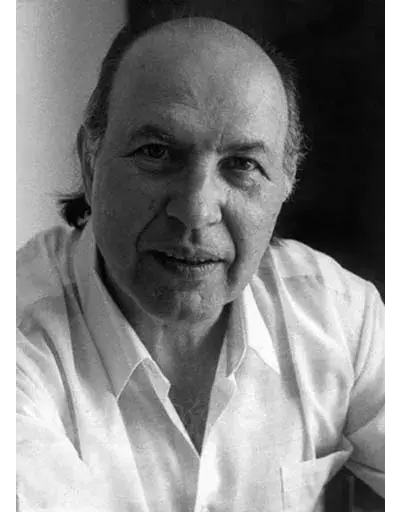
Imre Kertész was a Hungarian author and recipient of the 2002 Nobel Prize in Literature, "for writing that upholds the fragile experience of the individual against the barbaric arbitrariness of history". He was the first Hungarian to win the Nobel in Literature. His works deal with themes of the Holocaust (he was a survivor of a German concentration camp), dictatorship and personal freedom. He died on 31 March 2016, aged 86, at his home in Budapest after suffering from Parkinson's disease for several years.
