Aristotle Quotes
What has soul in it differs from what has not, in that the former displays life. Now this word has more than one sense, and provided any one alone of these is found in a thing we say that thing is living. Living, that is, may mean thinking or perception or local movement and rest, or movement in the sense of nutrition, decay and growth. Hence we think of plants also as living, for they are observed to possess in themselves an originative power through which they increase or decrease in all spatial directions.
Aristotle. On the Soul. Translated by J. A. Smith, Clarendon Press, 1931.


The law is far behind science in many areas, but one dramatic one is the notion of life itself. For the criminal law and for benefits entitlement, when life begins and when it ends are traditionally important. Yet is a very complex question in many cases. Abortion is another controversial area. Under ancient Jewish Law, a fetus is considered a living person when the crown of the head can be viewed from the mother’s vagina. Modern science has demonstrated that depending on how you define life, the fetus itself is alive during the pregnancy. But if one goes further with modern science, the sperm and egg cells are alive before conception. So are millions of other cells in the human body which we kill routinely—some intentionally as when we take an antibiotic to terminate “undesirable” bacteria. Many orthodox Hindus who will not kill living animals will kill living cells such as when they eat yogurt. Scientists have in recent times resisted trying to define the term “living” not only because of its complexity, but because almost any definition would soon be obsoleted by new knowledge which is accumulating so rapidly. Science simplifies and clarified many phenomena, but also makes others much more complex.


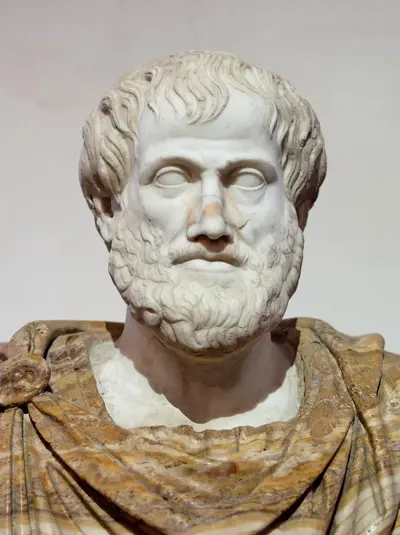
Aristotle (/ærɪˈstɒtəl/; Greek: Ἀριστοτέλης Aristotélēs, pronounced [aristotélɛːs]; 384–322 BC) was a Greek philosopher and polymath during the Classical period in Ancient Greece. Taught by Plato, he was the founder of the Lyceum, the Peripatetic school of philosophy, and the Aristotelian tradition. His writings cover many subjects including physics, biology, zoology, metaphysics, logic, ethics, aesthetics, poetry, theatre, music, rhetoric, psychology, linguistics, economics, politics, meteorology, geology and government. Aristotle provided a complex synthesis of the various philosophies existing prior to him. It was above all from his teachings that the West inherited its intellectual lexicon, as well as problems and methods of inquiry. As a result, his philosophy has exerted a unique influence on almost every form of knowledge in the West and it continues to be a subject of contemporary philosophical discussion.
