Simon Cameron Quotes
What could you expect with a man who had snubbed seventy senators?
Judge Ebenezer Hoar was nominated by President Grant to the Supreme Court. Hoar was not confirmed by the Senate:
Simon Cameron, 1799-1889, U.S. Senator (Democrat & Republican, PA), U.S. Secretary of War, Quoted in Hofstadter, Anti Intellectualism in American Life, 1963
Sourced by: Eigen's Political and Historical Quotations


TR has somewhat of a “straight arrow” and a reformer at the same time. The ethical standards of politics then were even lower than that of modern times, and Roosevelt particularly offended the people in his own party. See {585079} for the negative view of TR by the head of his own party.

George W. Bush had become very unpopular and many politicians were trying to distance themselves from him, his policies, and the poor implementation of those policies. Senator Joseph Lieberman, a Democrat, had just lost his own primary election and was attacked because he advocated support of the American president in war and foreign policy.


Senator Roscoe Conkling was the Republican Leader of the Republican Party and a party boss of the old school. Hays was a reformer, especially about appointments where he generally tried to pick the most meritorious candidate instead of the party loyalists desired by Conkling. There was (and still is) a tradition in the Senate that the Senators from the state of residence of any Presidential appointment had a veto of any Federal appointments in the state. Conkling, in addition to being the party leader, was the senior senator from New York and wanted two party loyalists for the jobs. Hayes appointed the better qualified men and decided to fight for the nomination of his candidates, but expected tha Conkling was strong enough to assure that the Senate would not confirm Hayes’ New York appointments. See {622340}. However, Hayes won.

Rejecting the political support of Joseph R. McCarthy and other radical conservatives:


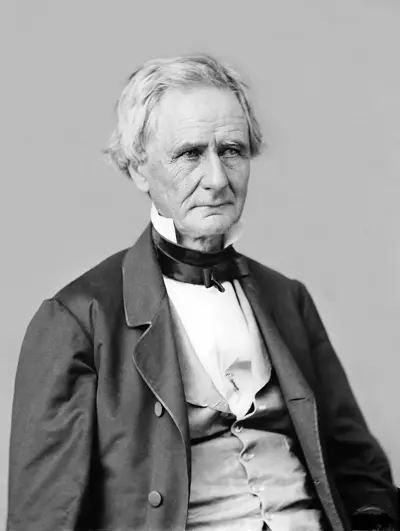
Simon Cameron was an American businessman and politician. He represented Pennsylvania in the United States Senate and served as United States Secretary of War under President Abraham Lincoln at the start of the American Civil War.
