Maxim Gorky Quotes
What can you do by killing? Nothing. You kill one dog, the master buys another-that's all there is to it.
Gorky, Maxim. Mother. Translated by Margaret Wettlin, Progress Publishers, 1980, p. 154.


This proverb only makes sense in the light of understanding the Arab concept of revenge—“blood.” In a rural desert environment where little can be expected of government, the Arabs have developed a law enforcement and peace keeping mechanism which while primitive from modern standards, nevertheless worked to some degree. It is that revenge—“blood” is a moral necessity and obligation of all people, and revenge is not limited by time or to the individuals involved in the first incidence. The immediate family are the first to extract revenge, but the extended family follows and often the entire clan. Sometimes revenge is tribal or even national. Anyone who fails to revenge a member in his group is not only a disgrace, but is a clear and present danger to the group because then they can be attacked with impunity. So revenge is a strong obligation of the group members and blood must be paid with blood no matter how many generations it may take. The only thing that keeps me and my family safe, is the surety what whosoever kills one of us will themselves be killed or if they die a natural death we will take revenge on one of the evildoers relatives. Crime must never pay!


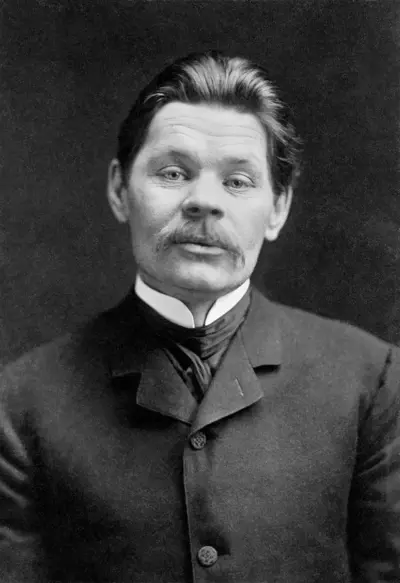
Alexei Maximovich Peshkov, primarily known as Maxim Gorky (Russian: Макси́м Го́рький), was a Russian and Soviet writer, a founder of the socialist realism literary method, and a political activist. He was also a five-time nominee for the Nobel Prize in Literature. Prior to his renown as an author, he frequently changed jobs and roamed across the Russian Empire; these experiences would later influence his writing. Gorky's most famous works were The Lower Depths (1902), Twenty-six Men and a Girl (1899), The Song of the Stormy Petrel (1901), My Childhood (1913–1914), Mother (1906), Summerfolk (1904) and Children of the Sun (1905). He had associations with fellow Russian writers Leo Tolstoy and Anton Chekhov; Gorky would later mention them in his memoirs.
