Marc Guggenheim Quotes
We're not militant, but there are certain things that are absolutely secret. There was a pilot printed on red paper, and I read everything on my iPad and have a scanner on my desk for these purposes. I scanned in the script, and red paper script scans in perfectly fine.
Guggenheim, Marc. Interview by Borys Kit. "Marc Guggenheim on Secrecy in Hollywood." The Hollywood Reporter, 14 Nov. 2013.


This radical reform did not make much headway. The “need to know" standard used specific knowledge to signify the status of different officials and was intended to minimize the likelihood of intelligence leaking as few people saw the whole picture and understood the implications. But that was the great weakness in that the major purpose of intelligence is to analyze the information and guide the nation’s policies and responses to events and situations. Without all the information available so many intelligence and other officials are unable to ‘connect the dots’ and see the picture emerging. The attack of September 11 was a classic example where much of the information that was known never was conveyed to most people and so no one had a big enough picture. By the time one could establish a ‘need to know’ it was too late to utilize the conclusions even if they were reached in time.


The new security procedures for allowing foeign students to study in the United States caused huge delays in the process and messed up a system that had been working well for years. It didn’t occur to the Secretary that a new system might be more efficient. That was the main reason for most organzations changing their systems--to gain efficiency.

At the time The Patriot Act was being hotly debated—especially the section which allowed Federal authorities to inspect the patron records of any library while a gag order prohibited the library staff from even telling the patron that their records were being inspected. Most librarians mentally opposed this provision as an over balance, compromising the call value of library privacy.
Glaxo issued Avandia a drug for diabetes, but the company began receiving reports of heart attacks and other cardio-vascular problems occurring with the drug. A team gathered the data and summarized it for the Senior Management. Drug companies are required by law to inform the FDA of any adverse data that they may know about relative to any of their drugs. Glaxo did not. Further, the Senior management ordered the data “suppressed” and it was so for a decade. Finally the e-mail was leaked to a Congressional Committee when there were other data coming in about the problems with Avandia. The FDA began a new review of the safety of Avandia, but the company had the profits for a decade. Some people had dead friends and relatives. It was generally thought that this sort of thing would never happen in an industry where all the companies are very substantial and a loss of income of any drug would not bankrupt the company, but more and more incidents began coming to light in the early 21st century.


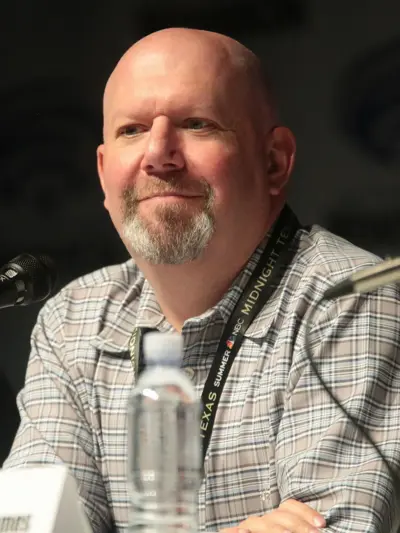
Marc Guggenheim is an American screenwriter, television producer, comic book writer, and novelist. He is best known as the creator of the television series Eli Stone (2008–2009), Arrow (2012– 2020), and Legends of Tomorrow (2016–present), executive producer of the animated series Tales of Arcadia (2016–present), as well as the writer of the feature films Green Lantern (2011), and Percy Jackson: Sea of Monsters (2013).
