Aleksander Kwasniewski Quotes
We're in a place where no words can tell the truth about what happened... But they have to. This was hell on earth.
Kwaśniewski, Aleksander. "Address at the 60th Anniversary of the Liberation of Auschwitz-Birkenau." 27 Jan. 2005, Oświęcim, Poland.


This was the worst storm that hit the East Coast that anyone could remember. Despite the Governor’s shock, he and the other East Coast Governors together with the Federal and local governments performed magnificently keeping the fatalities very low considering the ferocity of the storm and the tens of millions of people affected.

Sectarian fights had begun to break out two years before. These escalated in ferocity and soon there were some deaths. But this event of terror, torture and atrocity against a family that was not fighting changed the nature of the interreligious Irish conflict forever. The outraged Protestants organized and armed themselves and things came to a climax in September 1795 when there was an armed battle in which the Protestants killed 30 Catholics who were now calling themselves “Defenders”, with few losses. They then marched to Longhgall and there, in the home of James Sloan the Orange Order was founded and the two groups fought each other for the next 200 years.

On that single day, 27,000 French Soldiers were killed in battle. The French Generals, with little understanding of the then modern weapons and their power, sent whole divisions on a bayonet charge and they were just mowed down by the latest German versions of machine guns. They assumed that if they failed to take a German position defended by machine guns, it was only because they had not sent enough men to make the charge. Each successive failure produced another charge with even more men.


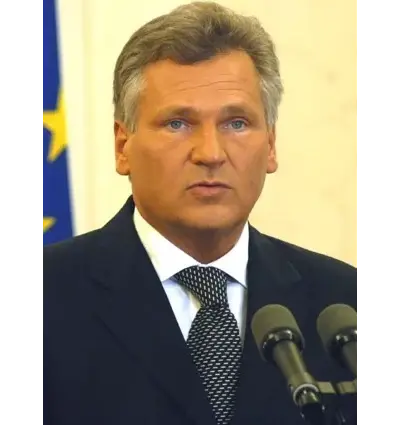
Aleksander Kwaśniewski is a Polish politician and journalist. He served as the President of Poland from 1995 to 2005. He was born in Białogard, and during the communist rule, he was active in the Socialist Union of Polish Students and was the Minister for Sport in the Communist government during the 1980s. After the fall of Communism, he became a leader of the left-wing Social Democracy of the Republic of Poland, a successor to the former ruling Polish United Workers' Party, and a co-founder of the Democratic Left Alliance.
