Abdullah Ahmad Badawi Quotes
Well, there are other aspects, I still command very good support in the party.
Badawi, Abdullah Ahmad. Interview by Lorraine Hahn. Talk Asia, CNN, 2004.


Obama was a President who believed deeply in the concepts of checks and balances and separation of powers. He did not punish members of Congress who opposed him by closing federal installations in their state of district, not giving government contracts to companies in his district and in the case of member of his own party who were “recalcitrant” supporting opponent in primary elections and failing to support in general elections. Presidents Nixon and Johnson used these techniques particularly effectively. As a result they pushed their legislative programs through Congress very effectively. All other modern Presidents have done this to one degree or another, but Obama did not. He believed that pressure on member of Congress should be limited to persuasion and public debate moving public opinion. Many seasoned politicians and political observers however thought that this was Obama’s biggest weakness as a President. Lyndon Johnson did not have to actually punish many member of Congress, as his willingness to do so was well known and thus few opposed him when he called or met with them and “gave them the treatment.” But Congress knew that Obama had taken punishment and retaliation off the table, and many opposed him including member of his own party.


Johansson is describing the origin of the word “hegemony.” During the 5th Century B.C. Athens and their allies formed the Delian League to combat the Persian Empire. Athens, as the most powerful city-state in Ancient Greece, controlled the alliance and the League soon turned into the Athenian “empire” or “hegemony.”

Republican Party primary elections had become very contentious. The radical right and the Tea Party, though a minority of the party, had the power to destroy almost any Republican candidate’s chances. So those Republican political candidates were forced to pander to the extreme right and then try and backtrack to the center for the general election. As a result, few people believed the statements of Republican office seekers as no one knew what they really believed including members of their own party, Bush, no longer running for any political position, found himself with much more credibility and influence in the party than those who were running for office. The problem of appealing to party extremes was not unique to the Republicans at that time, but the degree and extent was unprecedented accounting for the distrust.

Blair was then the leader of the opposition Labor party. Major, the prime minister, did not have firm control of his own party and was whipsawed between different factions. He was ousted by his own party, not by losing an election.

The 2014 House of Representatives was probably the worst in American History. The Republican Speaker of the House did not have any control over the Tea Party wing of his caucus, but they controlled him in most instances. Even when he made bargains with the President and the Democrats, he could not get his caucus to go along. Almost no legislation was passed and the few bills that were passed were symbolic, were never considered by the Senate and the President did not even have to exercise his power of veto during that Congress.


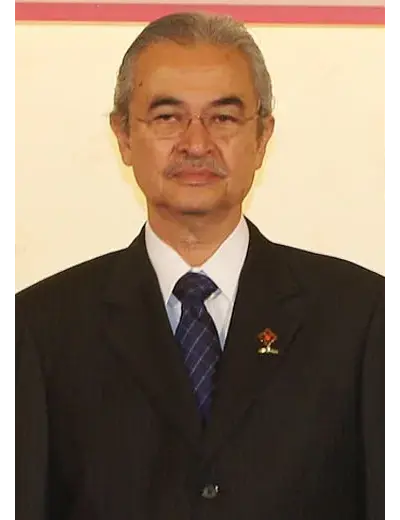
Tun Abdullah bin Ahmad Badawi is a Malaysian politician who served as the 5th Prime Minister of Malaysia from 2003 to 2009. He was also the President of the United Malays National Organisation (UMNO), the largest political party (that time) in Malaysia, and led the governing Barisan Nasional parliamentary coalition. He is informally known as Pak Lah, Pak meaning 'Uncle', while Lah is taken from his name 'Abdullah'. He is also referred to as the "Father of Human Capital Development" (Bapa Pembangunan Modal Insan).
