Ali Abdullah Saleh Quotes
We will fight hostage taking like we fight terrorism.


For the last 300 years, Muslim terrorists—corsairs at sea and petty tribal leaders on land—have made a lucrative business of kidnapping people and holding them for ransom. When Thomas Jefferson went to war off the Barberry coast, the Americans were the only Western nation who did not want to appease the terrorists and pay the ransoms or pay an annual “tribute” to guarantee safe passage (protection money). The European powers at the time and since could crush the terrorists militarily but there would be an economic cost for the expedition and lives would be lost. The typical calculus was that it was cheaper to pay the ransom than to pay the cost of a military solution. Even the United States then paid the yearly tribute for a while. However, this has reinforced the hostage taking behavior over the years and it is still in force. While the United States has a policy against paying ransoms, our government maintains a blind eye to private citizens, families or private companies paying to free the hostages. The Europeans, in contrast, generally allow even the government to pay ransoms. Weddady and other Muslim leaders have and continue to urge a policy of no ransom and use of force wherever possible. Muslim nations like Algeria and Turkey have learned that this is the best way to handle kidnapping terrorists and every few years, new terrorists try again and they attack quickly. In contrast European hostages are taken by the hundreds throughout the year. Meanwhile, piracy and hostage taking for ransom has spread to some Asian cultures so the world problem is not uniquely with Muslim terrorists any longer.

By paying kidnappers who hold Americans hostage for ransom, the United States would just be encouraging the kidnappers and produce more kidnapping. However in some hostage situation, especially with ISIS and other terrorists the refusal to pay ransom means a horrible and cruel death for the American kidnap victims. Many of the European nations tend to secretly pay the hostage takers just as they were will to pay the Barbary Pirates and Corsairs in the 18th century. There is no right answer other than to defeat the terrorists and put them out of business.


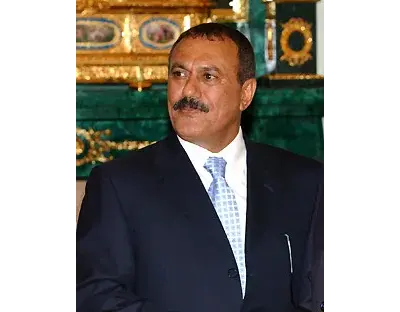
Ali Abdullah Saleh was a Yemeni politician who served as the first President of Yemen, from Yemeni unification on 22 May 1990 to his resignation on 25 February 2012, following the Yemeni Revolution. Previously, he had served as President of the Yemen Arab Republic, or North Yemen, from July 1978 to 22 May 1990, after the assassination of President Ahmad al-Ghashmi.
