Robert Crippen Quotes
We were flying on a winged vehicle that would do reentry different than we had ever done before. So all of those were firsts. Test pilots truly love firsts.
Crippen, Robert L. Interview by Rebecca Wright. NASA Johnson Space Center Oral History Project, NASA, 26 May 2006.


Two years later he flew. That is how fast and dramatic the Wright Brothers work had gone. Once they got on the right track, everything began to fall into place. Two years earlier he had been optimistic. See {613170}.

Born in the Ukraine to middle class parents, he became an successful engineer in Russia before he emigrated in 1919. America has not only been a magnet for the persecuted and the poor but highly skilled, and educated people came to America for the opportunity to further their career. No companies in Europe were then interested in producing large airplanes. In America, within 4 years he started his own company. He helped to design the famous Pan American Airways Flying Boats and in 1942 his company developed the world’s first production helicopter. He might have done that in France, Russia or elsewhere but he chose America like millions of other immigrants.

Ataturk quickly envisioned the importance of the airplane. He even sent is daughter to Russia to learn to fly a plane, and she became the first Turkish Military Officer to do so. This was typical of Ataturk—killing two or more reform “birds” with one stone. He not only brought the airplane into the Turkish consciousness by having his daughter fly which attracted great attention of the press and got people talking, but showed that women were capable of the most complex technological tasks. Before Ataturk, few women in Turkey ever did anything but parenting and homemaking. Ataturk gave Turkish women the vote before America adopted women’s suffrage.


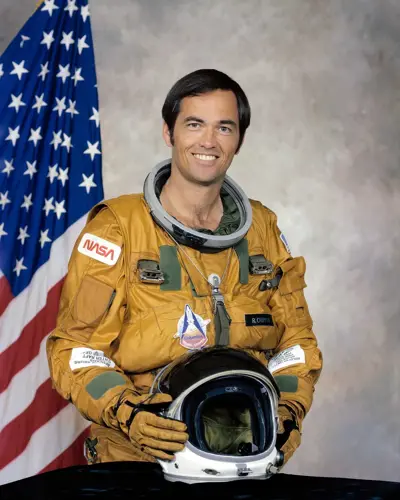
Robert Laurel Crippen is an American retired naval officer and aviator, test pilot, aerospace engineer, and retired astronaut. He traveled into space four times: as Pilot of STS-1 in April 1981, the first Space Shuttle mission; and as Commander of STS-7 in June 1983, STS-41-C in April 1984, and STS-41-G in October 1984. He was also a part of the Manned Orbiting Laboratory, Skylab Medical Experiment Altitude Test, Apollo–Soyuz, and the Approach and Landing Tests for the Space Shuttle. He did not go to space for any of those programs.
