Immanuel Wallerstein Quotes
We seem to be in the midst of a process of cascading bifurcations that may last some 50 more years. We can be sure some new historical order will emerge. We cannot be sure what that order will be. Concretely, we may symbolize the first bifurcation as the effect of the world revolution of 1968 which continued up to and including the so-called collapse of the communisms in 1989, the social bifurcation.
Wallerstein, Immanuel. Utopistics: Or, Historical Choices of the Twenty-First Century. The New Press, 1998, p. 35.


The Cold War was raging, newly independent nations were emerging from colonial rule, and there were revolutions in some parts of the world.

Vladimir Lenin. This statement was key in developing a great fear of the Communists by most of the capitalistic world. Most people in the West had seen that the conditions were so terrible in Russia that a revolution might be a good thing for the Russians—even a Communist revolution. But when the new Russian Communist Leader made this statement, most countries then regarded the Russian Communist party as a potential menace and threat to their stability.

The “Great War” was a term then used for the First World War. He actually understated the effect on the generations. It affected more than two.

The Ambassador of Bavaria represented an area where the politicians saw democrats and socialists as their great enemy, as did many of the leading right wing conservatives in all of Germany. They believed that a great war would give them a chance to crush democratic socialism in Europe. Bethmann warned that just the opposite might result, and indeed it did. He was correct. Many of the crowned heads of Europe were deposed and the democratic socialists emerged as a major political factor in the victorious democracies. Bethmann-Hollweg, however, was not a strong leader and could not prevent the Conservatives, the military leaders, and Kaiser Wilhelm from initiating WWI.


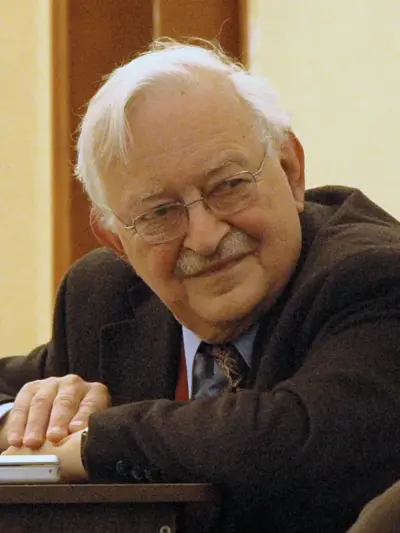
Immanuel Maurice Wallerstein was an American sociologist and economic historian. He is perhaps best known for his development of the general approach in sociology which led to the emergence of his world-systems approach. He was a Senior Research Scholar at Yale University from 2000 until his death in 2019, and published bimonthly syndicated commentaries through Agence Global on world affairs from October 1998 to July 2019.
