Martin Luther Quotes
We refuse to have our conscience bound by any work or law, so that by doing this or that we should be righteous, or leaving this or that undone we should be damned.
Luther, Martin. Luther's Works, Vol. 26: Lectures on Galatians, 1535, Chapters 1-4. Edited by Jaroslav Pelikan, Concordia Publishing House, 1963.


This is the ethical and moral foundation of the doctrine adopted at the Nuremberg German War Crimes trials. Required obedience to an improper/illegal order is not a defense.

Congress had passed the Edmunds Act prohibiting plural marriage. Taylor, who himself had 7 wives and 35 children, went “underground” and secretly operated the church from exile.


It was Spinoza’s insistence that man should be free and use reason rather than faith and not to adhere to authority that got him excommunicated by the Jews, The Catholics and the Muslims, the only such man in history. Authority per se was evil if it was listened to.

Wayland, felt slavery was immoral and against the world of God. But he sought a middle-of-the-road position to keep his religion from schism and his University Trustees from conflict. The Baptist Churches of America were split asunder by the slavery issue. Wayland, who represented both the Northern abolitionist-leaning Baptist Churches and the Southern pro slavery churches, tried to forge a middle ground whereby slavery would end by the moral enlightenment of man and his love for fellow man as opposed to by legislation or economic pressure. He successfully predicted the outcome of the conflict except for one error he made. The conflict DID end slavery. The Baptist Church finally split into southern and northern wings in 1845. To this day, the Southern Church is extremely conservative, and fundamentalist; the Northern, very liberal and modern.


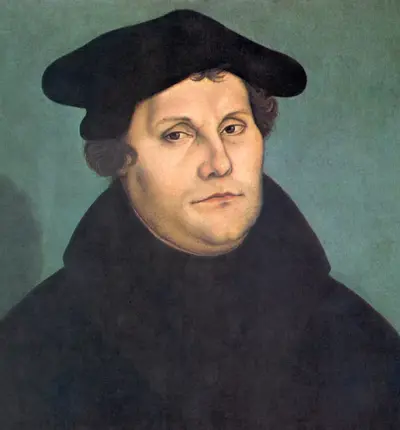
Martin Luther, O.S.A. was a German professor of theology, priest, author, composer, Augustinian monk, and a seminal figure in the Reformation. Luther was ordained to the priesthood in 1507. He came to reject several teachings and practices of the Roman Catholic Church; in particular, he disputed the view on indulgences. Luther proposed an academic discussion of the practice and efficacy of indulgences in his Ninety-five Theses of 1517. His refusal to renounce all of his writings at the demand of Pope Leo X in 1520 and the Holy Roman Emperor Charles V at the Diet of Worms in 1521 resulted in his excommunication by the pope and condemnation as an outlaw by the Holy Roman Emperor.
