Reinhold Niebuhr Quotes
We ought to really at least recognize the common predicament of Communists and democrats - or Americans, whatever.
Niebuhr, Reinhold. Interview by Mike Wallace. The Mike Wallace Interview, American Broadcasting Company, 27 Apr. 1958.


He was referring to Stalinism.

This was a very prescient prediction. Russia and China as well as lesser communist states have followed his prediction.

This quotation is typical of Mrs. Roosevelt’s strong criticism of Communism. However despite these positions, many of her political enemies continued to call her a Communist or a “fellow traveler”—one who tended to support Communism.

The Italian Communists were culturally and ideologically very different from the Russian Communists. The Italian view was a more nationalistic one and was closer to a Socialist Democracy than a “dictatorship of the proletariat”. Much more tolerant of diversity and not as ideological. See {637829} as a big example of the difference. Yet this was still in the midst of the Red Scare in America and some other areas of the West. After WWII, the CIA had secretly spent millions to get Italians to vote for the non-Communist candidates and helped organize Italian anti-Communist politicians who didn’t want the Communists to alter the Italian government to reflect any Communist or Socialist ideas. Meanwhile, the Italian party was under great pressure from Russia and some of the other Communist satellite countries to adopt a hardline revolutionary communist programs. Berlinquer and other Italian Communist leaders had many misgivings about Russian style Communism and they had to play off one side against the other for years.

Many Americans believed that the Communist government of Russia was softening its world revolution doctrine as the Communist government was concentrating on coping with the huge problems they faced. He argued that there was no ideological mellowing. Immediately after the Russian Revolution, the provisional government appointed him as Ambassador to the United States. However, the provisional government was supplanted when the Bolsheviks took over. Not enamored of Communism, he stayed in the United States with many other Russian refugees.


He was one of the few American politicians objecting to the ending of the boycott of Cuba.


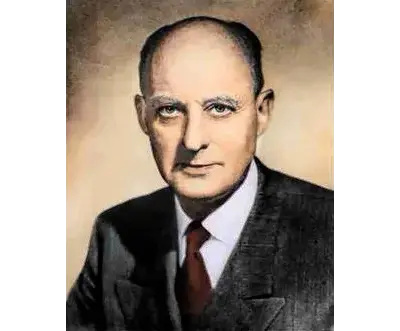
Karl Paul Reinhold Niebuhr (1892–1971) was an American Reformed theologian, ethicist, commentator on politics and public affairs, and professor at Union Theological Seminary for more than 30 years. Niebuhr was one of America's leading public intellectuals for several decades of the 20th century and received the Presidential Medal of Freedom in 1964. A public theologian, he wrote and spoke frequently about the intersection of religion, politics, and public policy, with his most influential books including Moral Man and Immoral Society and The Nature and Destiny of Man. The latter is ranked number 18 of the top 100 non-fiction books of the twentieth century by Modern Library. Andrew Bacevich labelled Niebuhr's book The Irony of American History "the most important book ever written on U.S. foreign policy." The historian Arthur Schlesinger Jr. described Niebuhr as "the most influential American theologian of the 20th century" and Time posthumously called Niebuhr "the greatest Protestant theologian in America since Jonathan Edwards."
