Arthur Schopenhauer Quotes
We must set limits to our wishes, curb our desires, moderate our anger, always remembering that an individual can attain only an infinitesimal share in anything that is worth having; and that on the other hand, everyone must incur many of the ills of life
Schopenhauer, Arthur. Counsels and Maxims. Translated by T. Bailey Saunders, Swan Sonnenschein & Co., 1890, p. 131.


1st Baron Clive. Clive went to India as a military accountant and clerk of the British East India Company which had its own Army intended for protection of Company staff and property. Clive worked his way up the military and company ladder and then commanded all the British (company) troops. Under his command the Company, in the name of the British Government actually began to rule territory at first buying that right from the Indian ruler for English pounds of silver. Then Clive used the Army to deal with disorder and banditry and took over new territory where local leaders had aided those who were harassing the British. Soon, he had control of more land than the rest of Britain together with many more people. In the process, his accounting skills served him well and the British East India Company had made a fortune larger than anything in British history and Clive himself became the richest man in England. There was a famine in India and Clive and the Company did little to alleviate the suffering. They continued to make huge profits while many of the people were dying, hence the nickname. The inquiry was called to see of Clive and the Company had been escessive in their rule and had taken too much profit.


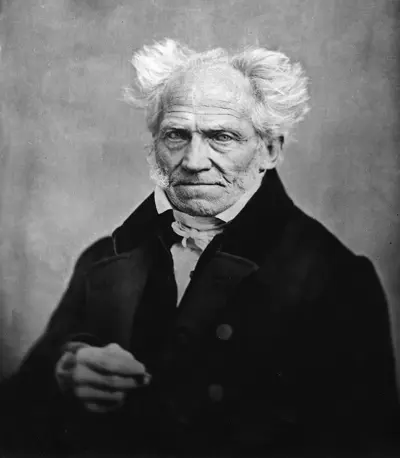
Arthur Schopenhauer was a German philosopher. He is best known for his 1818 work The World as Will and Representation (expanded in 1844), which characterizes the phenomenal world as the product of a blind and insatiable noumenal will. Building on the transcendental idealism of Immanuel Kant, Schopenhauer developed an atheistic metaphysical and ethical system that rejected the contemporaneous ideas of German idealism. He was among the first thinkers in Western philosophy to share and affirm significant tenets of Indian philosophy, such as asceticism, denial of the self, and the notion of the world-as-appearance. His work has been described as an exemplary manifestation of philosophical pessimism.
