Clement of Alexandria Quotes
We must not cast away riches which can benefit our neighbor. Possessions were made to be possessed; goods are called goods because they do good, and they have been provided by God for the good of men: they are at hand and serve as the material, the instruments for a good use in the hand of him who knows how to use them.
Clement of Alexandria. The Ante-Nicene Fathers, Volume II: Fathers of the Second Century. Edited by Alexander Roberts and James Donaldson, Christian Literature Publishing Company, 1885, p. 594.


This statement was the first declaration of a "war on poverty". He never did eliminate poverty, but he did significantly improve conditions in Russia. Wikipedia: "During the first years of his reign, he was both popular and prosperous, and ruled well. He recognized the need for Russia to catch up with the intellectual progress of the West and did his best to bring about educational and social reforms. He was the first tsar to import foreign teachers on a large scale, the first to send young Russians abroad to be educated, and the first to allow Lutheran churches to be built in Russia."


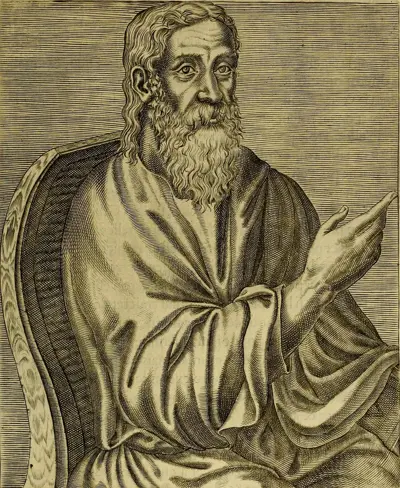
Titus Flavius Clemens, also known as Clement of Alexandria (Greek: Κλήμης ὁ Ἀλεξανδρεύς; c. 150 – c. 215 AD), was a Christian theologian and philosopher who taught at the Catechetical School of Alexandria. Among his pupils were Origen and Alexander of Jerusalem. A convert to Christianity, he was an educated man who was familiar with classical Greek philosophy and literature. As his three major works demonstrate, Clement was influenced by Hellenistic philosophy to a greater extent than any other Christian thinker of his time, and in particular, by Plato and the Stoics. His secret works, which exist only in fragments, suggest that he was familiar with pre-Christian Jewish esotericism and Gnosticism as well. In one of his works he argued that Greek philosophy had its origin among non-Greeks, claiming that both Plato and Pythagoras were taught by Egyptian scholars.
