Martin Luther King Jr. Quotes
We must dispel the negative and harmful atmosphere that has been created by avaricious and unprincipled realtors who engage in "blockbusting." If we had in America really serious efforts to break down discrimination in housing, and at the same time a concerted program of government aid to improve housing for Negroes, I think that many white people would be surprised at how many Negroes would choose to live among themselves, exactly as Poles and Jews and other ethnic groups do.
King, Martin Luther, Jr. "Playboy Interview: Martin Luther King Jr." By Alex Haley. Playboy, Jan. 1965, p. 74.

There was rampant segregation and discrimination in housing throughout the country and not only in the South. However, the doctrine then was this was for the states to control. However, the Federal Agency that was established to sell mortgage insurance to enable more Americans to buy homes, was also overtly discriminating.

He maintained these policies even after President Eisenhower’s January 1954 speech calling for people who were displaced as the result of urban renewal projects to be provided with Federal assistance in housing regardless of race. It is not known whether Sherman Adams shared Cole’s position with the President. Adams himself was forced to resign in a corruption scandal.
“FHA” was the Federal Housing Administration. This federal agency de facto controlled the vast majority of the mortgage loans in America. The agency, under the control of racists, redlined black neighborhoods from obtaining mortgages and even worse discouraged mortgage loans even in affluent white areas if it was an affluent Negro family that wanted to buy a house there. {637259} and {637260} are quotations which are examples of FHA racist policies.


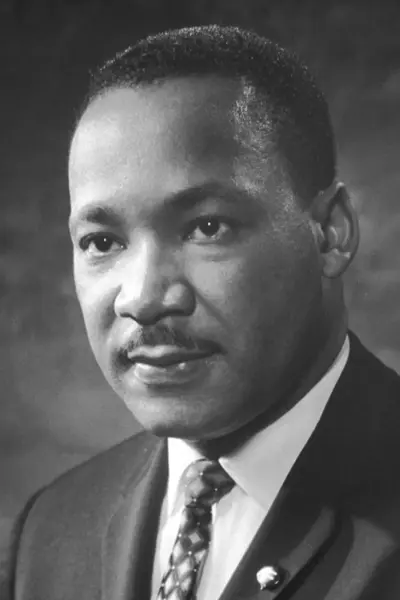
Martin Luther King Jr. was an African American Baptist minister and activist who became the most visible spokesperson and leader in the American civil rights movement from 1955 until his assassination in 1968. King advanced civil rights through nonviolence and civil disobedience, inspired by his Christian beliefs and the nonviolent activism of Mahatma Gandhi. He was the son of early civil rights activist Martin Luther King Sr.
