Gene Kranz Quotes
We have the young people, we have the talent, we have the imagination, we have the technology. But I don't believe we have the leadership and the willingness to accept risk, to achieve great goals. I believe we need a long-term national commitment to explore the universe. And I believe this is an essential investment in the future of our nation — and our beautiful, but environmentally challenged planet…
The American space program developed an intellectual schism between those who favored less emphasis on manned space flight and more on automated and robotic probes and those like Franz who thought there should be more manned missions. The manned missions generated the most excitement from the public and tended to get the most public support. The unmanned missions were far less expensive as the multiple layers of safety was not needed to protect lives, they could go one for many years, and they provided much more scientific information. Kranz and many others thought that the movement towards unmanned missions reflected a lack of leadership. Opponents felt that what Kranz wanted was leadership style that did not take sufficient account to the likely scientific contribution for the money spent and placed more value on drama and adventure.
Eugene F. Kranz, NASA's Flight Director for the Gemini and Apollo programs,, "Space Lifeguard : An Interview with Gene Kranz" at Space.com, April 11, 2000)
Sourced by: Eigen's Political and Historical Quotations


Most environmentalists limit the vision of their solutions to using less of our precious natural resources which is very important but just as important and perhaps more so in the long run is increasing the supply of these resources. Food is an example. The major reason that there is no serious food shortage world-wide is that we have increased the productivity of agriculture requiring less labor, less water, less fertilizer, less land, and less dependency on weather. Distribution has also improved, but there is no very good way of distributing something for which there is a great shortage.

This is why the American Government has played such a major role in most of the great technologies in American History. Interchangable Parts (A federal contract with Eli Whitney), Canal Construction (New York State built the Erie Canal), the Railroad (federal government gave hugh tracts of land to build the rail lines to the West), the Telegraph (No one would use it until the government financed the experiment to prove it by creating a line between Baltimore and Washington), AC Electricity, there the city of Rochester NY hired Tessler and Westinghouse to Demonstrate Generating Electricity at Niagra Falls and transmitting it over 20 miles which Edison’s Direct Current could not do), immunization (the Army Medical Corps gave the first grants to universities to develop the science of vaccines and immunization, the computer (in WWII the U. S. financed the development of computers sent to England to implement Turing’s breaking of the German “unbreakable” code), atiomic energy (the Manhattan Project—the largest scientific endeavor the world has known), the Internet (Developed with long term research funds for DARPA the future technology research arm of the Defense Department. American investors and businesspeople took each of these and developed them but the initial steps, when no capitalist dared risk on such basic and futureistic efforts were taken by American Government which probably could never have developed these technologies but the private sector could not do it with government in the role Moritz herein describes.


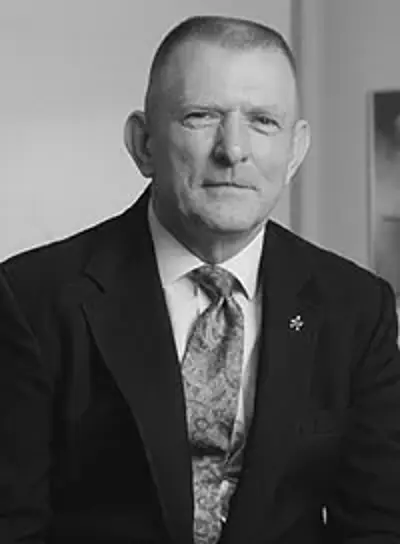
Eugene Francis "Gene" Kranz is an American aerospace engineer, a former fighter pilot, and a retired NASA Flight Director and manager. Kranz served as NASA's second Chief Flight Director, directing missions of the Gemini and Apollo programs, including the first lunar landing mission, Apollo 11. He is best known for directing the successful efforts by the Mission Control team to save the crew of Apollo 13, and was later portrayed in the major motion picture of the same name by actor Ed Harris. He is also noted for his close-cut flattop hairstyle and the dapper "mission" vests (waistcoats) of different styles and materials made by his wife, Marta Kranz, for his Flight Director missions.
